ARTURIA

fr

Produits

SonsStoreCommunautéassistance

Mark Mothersbaugh:

Mutating sound with Memory V

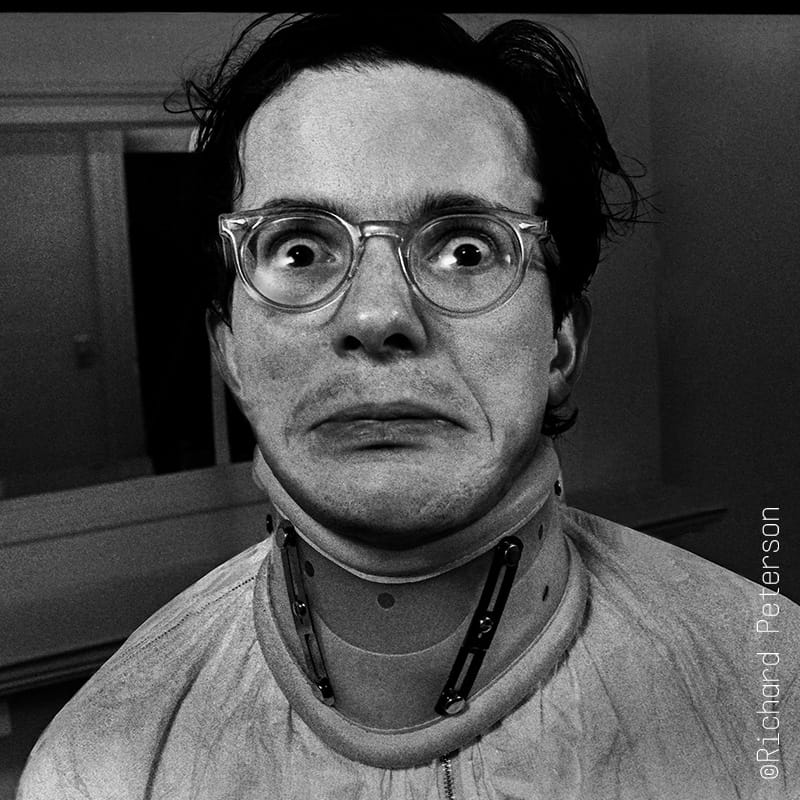
Mark Mothersbaugh has never treated sound as something fixed. Across five decades of music, film, television, games and visual art, his work has continually pushed familiar forms into stranger, sharper and more synthetic territory. As a founding member of DEVO, he helped define a new wave of electronic experimentation that still feels unmistakably alive. Beyond which, his music has reached across cult cinema, animated television, video games and contemporary scoring, from Rugrats to Wes Anderson.

We sat down with Mark at Mutato Muzika, his Los Angeles studio, to explore his analog archive, his long connection with Bob Moog, and the way Memory V brings the colossal character of the Memorymoog into a faster, more flexible and more powerful modern workflow.

“I wanted to write music nobody had ever heard.”

Sound and vision

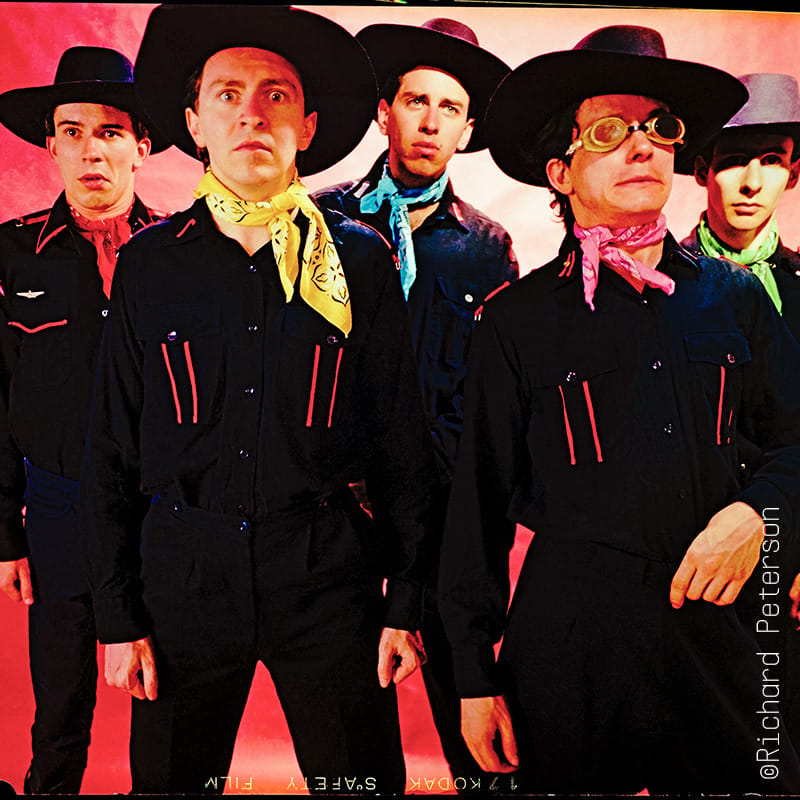
For Mark, music and image have always belonged to the same system. At Kent State, where he met Gerald Casale, the early ideas behind DEVO were shaped as much by art and film as by music. The band's world was built through characters, costumes, slogans, graphics and sound. Booji Boy, General Boy and the whole Devolutionary language became part of a wider mythology, where pop music could be strange, visual, satirical and confrontational all at once.

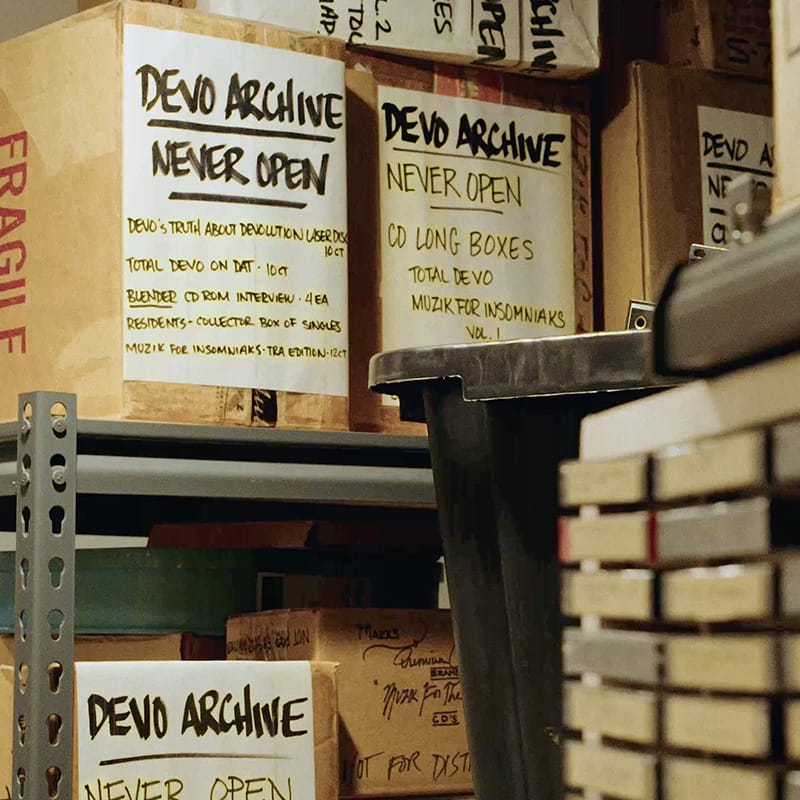
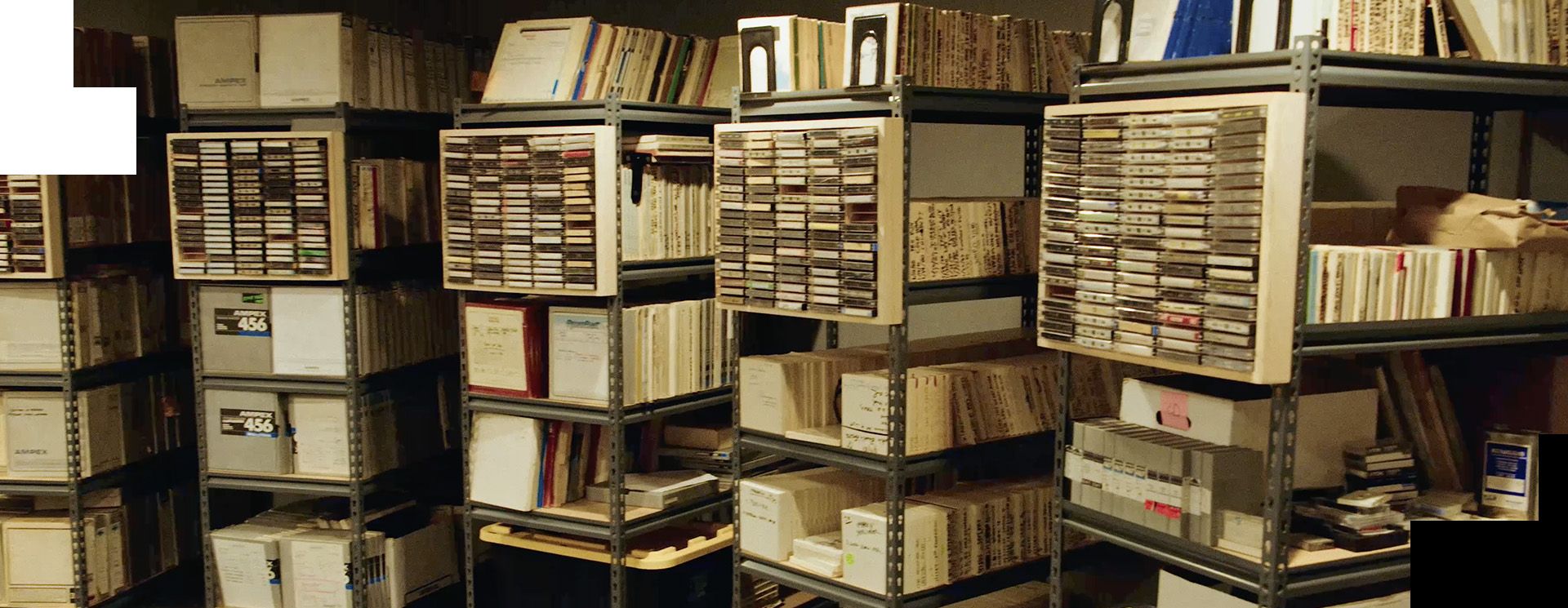
That sense of multimedia collision has followed Mark throughout his career. He draws on tapes, archive, adverts and everyday objects and moves between musical scoring, visual art, performance and experimental sound without treating them as separate disciplines. Inside Mutato Muzika this world is still going strong. The studio is part workplace, part archive, part creative engine room. Early DEVO materials exist alongside vintage machines, visual art, film projects and storied instruments.

The analog archive

Mark's relationship with synthesizers began with the search for sounds that did not belong to the rock and pop zeitgeist of the time. The Minimoog became one of his earliest and most important instruments, used to go beyond polite tones in search of something more mechanistic and unfamiliar. For DEVO the synthesizer was not a simple add-on or decoration, it was a way to make popular music feel novel, alien and strange.

That spirit carried into early recordings. At Conny Plank's studio in Germany, working on Q: Are We Not Men? A: We Are Devo! with Brian Eno and David Bowie nearby, Mark was surrounded by the energy of European electronic experimentation. The process was physical, manual and unpredictable. There was no instant recall, no automation and no simple way to return to a synth patch once created. Settings were written down by hand, patches had to be meticulously rebuilt and sounds that felt perfect one day could drift out of phase overnight.

It sounds really accurate to the original. It's more powerful, too.

A call from Bob Moog

Mark's connection to the Memorymoog began before the instrument became one of the defining polysynths of its era. After speaking with Bob Moog about a new theremin, Mark repeatedly asked for serial number 001. Instead, Moog eventually sent him something else: a prototype for a new synthesizer called the Memorymoog.

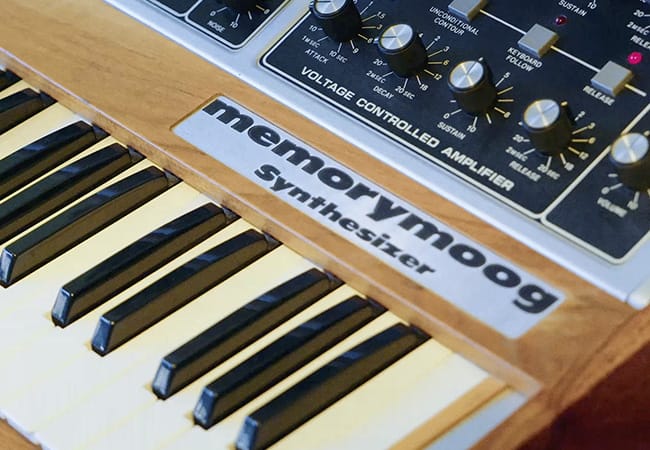
Released in 1982, the Memorymoog was Moog's most ambitious polyphonic statement. Three oscillators per voice, a classic ladder filter and six voices of analog force placed it among the most powerful polysynths of its time. Conceived as a kind of polyphonic answer to the Minimoog, it brought Moog's muscular tone into chords, brass, pads and wide harmonic movement.

For Mark, that instrument belongs unmistakably to a particular era. You play it and hear the period it came from and all the timbral depth and instability that made the original hardware so compelling.

Memory V: From archive piece to working instrument

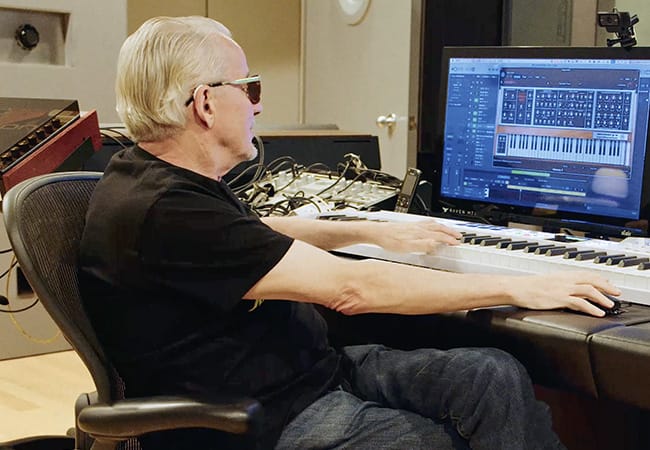
That perspective becomes clear when Mark moves from the original hardware to Memory V. The old instruments are still close by at Mutato Muzika, but working directly with them belongs to another phase of his creative life.

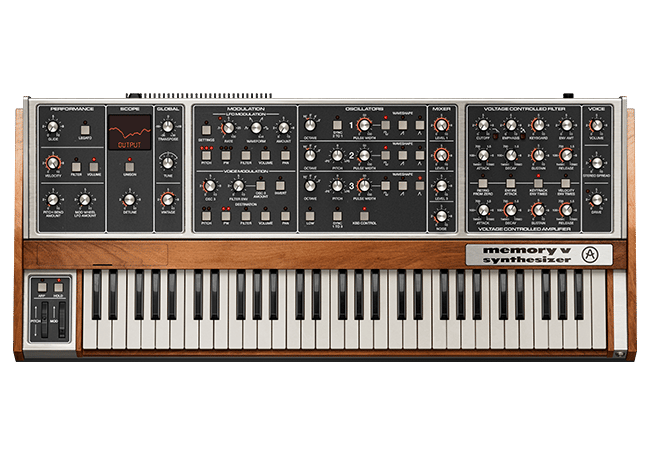
Sit down with the originals and it can take time to reach a sound. With Memory V, built on Arturia's component-accurate TAE® modelling, the relationship changes. To Mark it not only sounds true to the original Memorymoog, carrying the same weight and character of the triple-oscillator voice structure and ladder filter, but it also feels more immediate and more open to sonic transformation. Expanded to twelve voices with drag-and-drop modulation, a four-layer Multi-Arp, MPE support and expressive keyboard controls, the instrument goes further than the hardware ever could — but the DNA stays intact.

The integrated effects are a major part of the appeal. For Mark, having effects inside the synth is exactly the kind of thing he looks for because it allows him to create and record a fully matured, processed sound directly into a project. The patch, the modulation, atmosphere and post-processing become one gesture rather than disparate stages in a production chain.

They have the DNA, the genetic structure of what they were based on, but they're more powerful. They're more reliable. They just have a better quality of sound in general.

A personal connection

Mark Mothersbaugh's creative territory has always been the space where technology, humour, image and sound collide. He is not interested in nostalgia for its own sake. He is interested in how new generations take the tools in front of them and make something surprising, beautiful, outrageous or completely unexpected.

Memory V meets that outlook by preserving the force of the original Memorymoog while opening it up for the pace of modern production, performance and sound design. For an artist who has spent fifty years mutating sound into something new, the invitation and allure is the same as it ever was, just faster, more powerful and with fewer barriers to exploring your own sound.

Technology does give you more power, does let you move faster, and let you do things quicker. Kids have a romantic notion about early synths, but you can get to the point faster digitally.