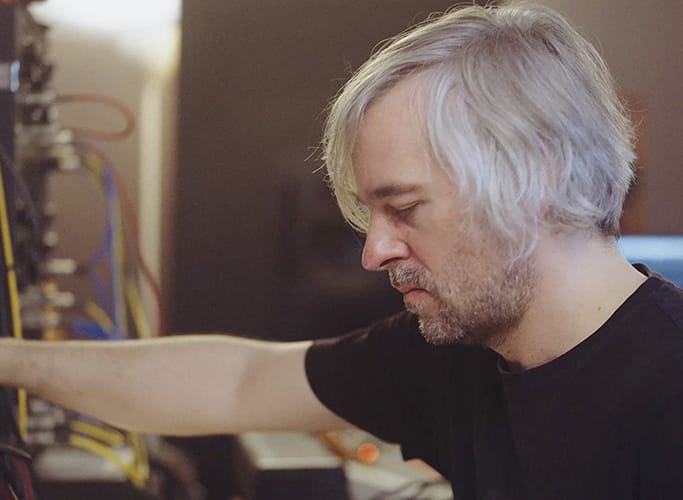
Hannes Bieger:
Hybrid control with
KeyStep 37 mk2
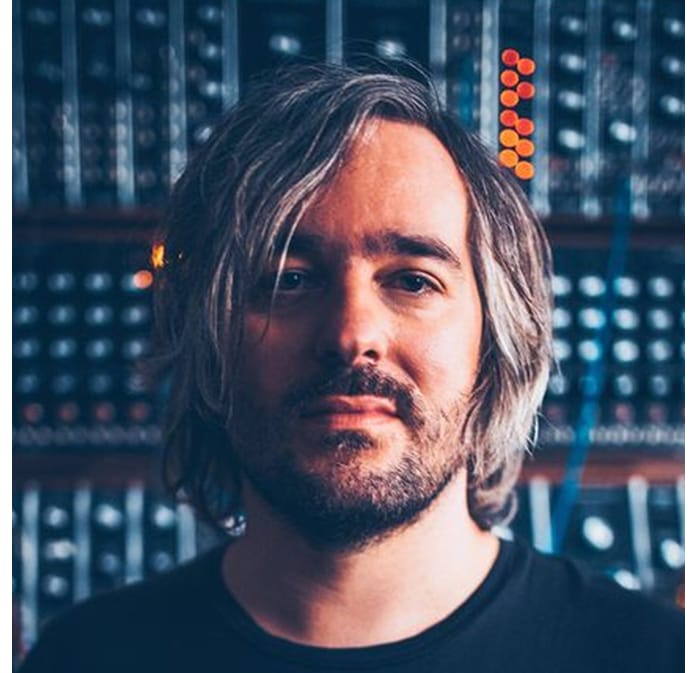
Hannes Bieger is a Berlin-based producer and mixing engineer whose work sits at the intersection of deep studio craft and live electronic performance. Across years of mixing for some of the most respected names in melodic techno and progressive house, he has built a reputation for precision, emotion, and sonic depth, while continuing to evolve his own music with the same rigor.
We met Hannes in his Berlin studio to talk about his hybrid methodology, the role Arturia’s V Collection plays in a setup full of coveted hardware, and how KeyStep 37 mk2 opens up a more playful, generative approach to building ideas - from initial arps to fully-formed jams.
Early influences
Hannes’ path into electronic music began with the guitar. He started playing aged 10, went straight to electric, and initially wanted to make rock music. A pivotal listening experience came in the early ’90s when he first heard Portishead’s debut, a shift he describes as immediate. From there, his journey moved through rock, funk, trip-hop, jazzy deep house, and more techno-related forms, gradually leading to the sound he works in today.
Even in those early years, he says sound itself mattered as much as the notes. That instinct became foundational: not just what is being played, but how it feels, how it moves air, how it sits. It also explains why production and engineering were never separate concepts in his mind, they were always part of the same act of making music.
Even when I was still a guitarist… how it sounded already mattered to me just as much as what I played.
Career-defining collaborations
This holistic approach to sound led Hannes into a multifaceted mixing career. As his own work began circulating, the assumption was that there must be a separate engineer behind it. In many cases, there wasn’t.
Over time, Hannes became a trusted collaborator for artists and labels across contemporary electronic music. A particularly important chapter was working with Steve Bug and Life and Death during a formative period for the label, including releases from Tale of Us, Mind Against, DJ Tennis, and others.
The throughline here isn’t just technical skill but an ability to help shape records from inside the process, hearing what a track is trying to become and supporting that evolution.
I suddenly became a super super busy mixing engineer… something that I had never planned.

V Collection in a room full of legends
Even with iconic hardware all around him, Arturia’s instruments remain deeply embedded in his daily process. This includes one of the instruments he uses most, the Mini V, despite owning the real deal. The hardware still holds emotional and sonic value, but familiarity, speed, and repeatability matter too. Mini V for example gives him a sound he knows inside out, and lets him get there quickly. In a professional workflow, that kind of fluency is not a compromise, it’s an advantage.
More broadly, V Collection appears less as a supplement and more as a core resource. Hannes describes it as a long-term staple, and effectively a standard in his field: a broad, reliable library whose instruments keep being improved and updated regardless of their release date. That ethos resonates with him because it mirrors his own approach.
Possibly more than half of all the VSTs I’m using are Arturia from the V Collection…They keep improving and keep improving… that is something that I always value this sort of striving to push the boundaries, because I’m striving to do the same in my work.
KeyStep 37 mk2 as a creative trigger
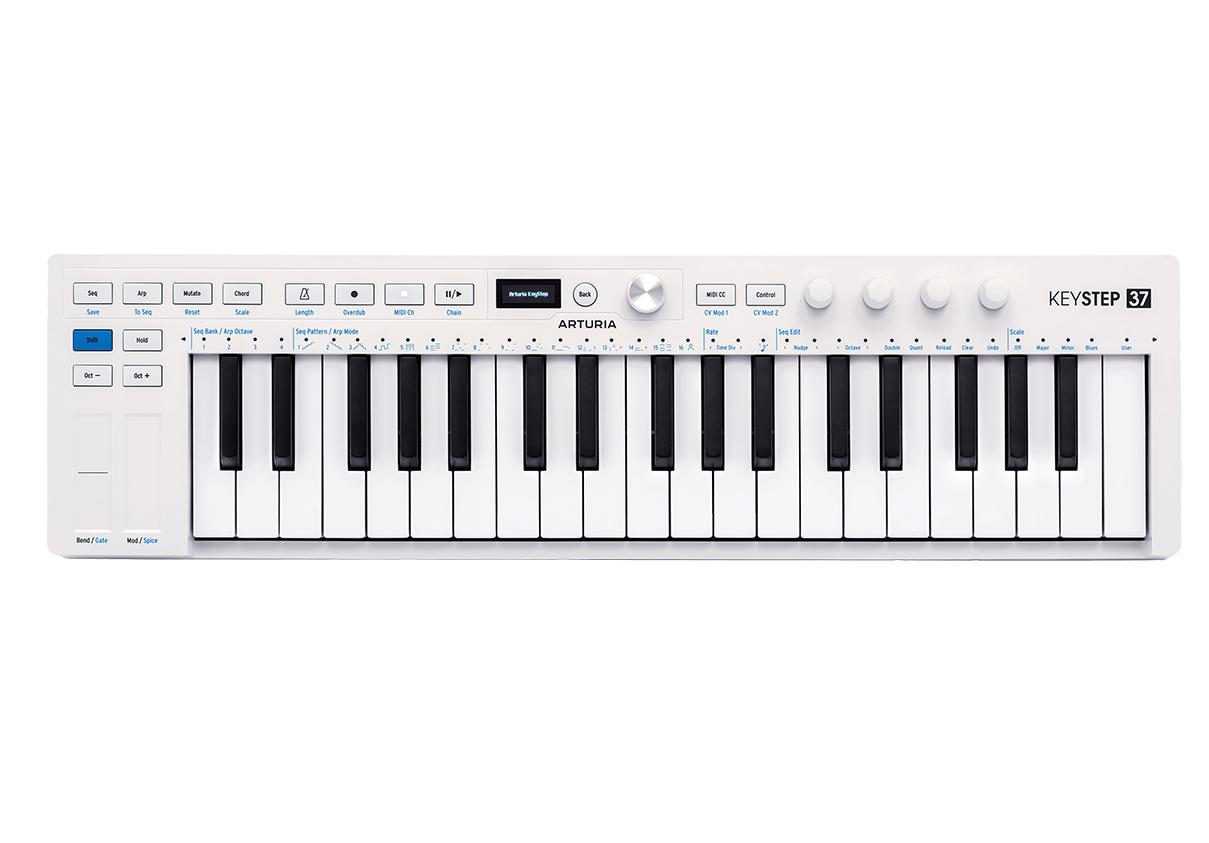
From there, we move onto KeyStep 37 mk2, an instrument that makes sense in Hannes’ world precisely because it changes how ideas are generated, not just how notes are entered.
In a studio like his, surrounded by larger instruments, compact controllers can easily feel like afterthoughts but KeyStep 37 mk2 earns its place by being more than just a matter of convenience and portability. Yes, it can travel but importantly it can traverse different roles and instruments within the same setup, moving quickly between stations, synths, and use-cases without friction.
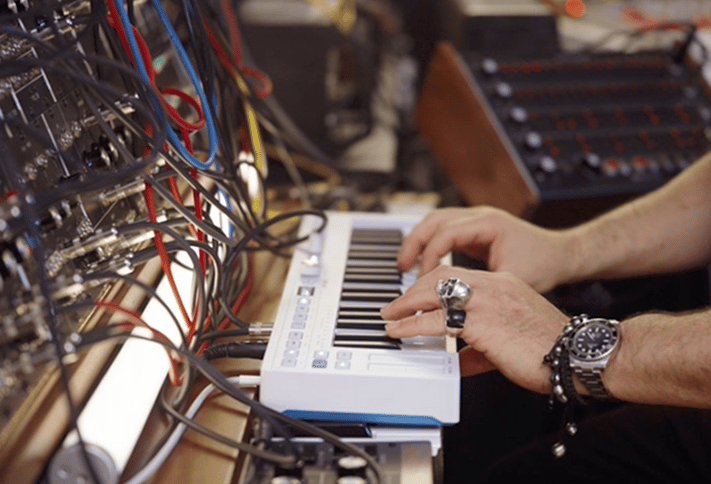
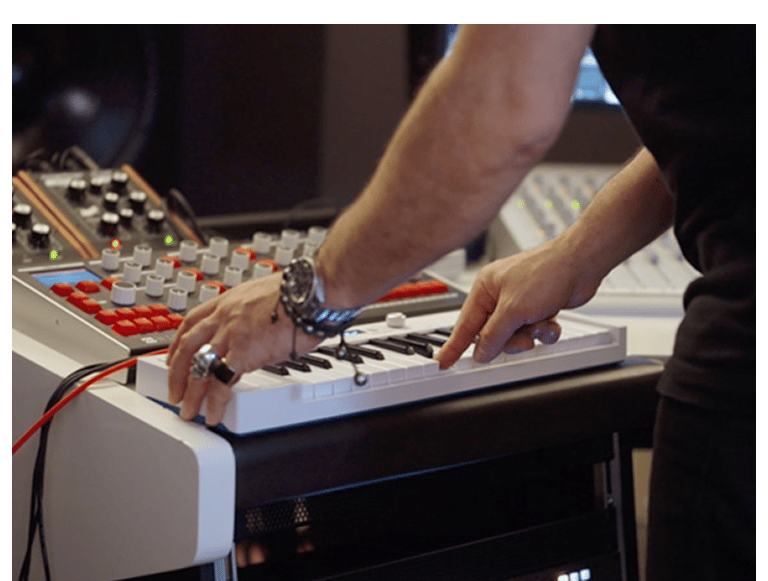
What stands out most is the arpeggiator. He describes many onboard arpeggiators as too limited; KeyStep’s goes further, especially once you bring in functions like Mutate and Spice. Instead of just repeating patterns, it introduces structured variation and generative ideas into the writing flow.
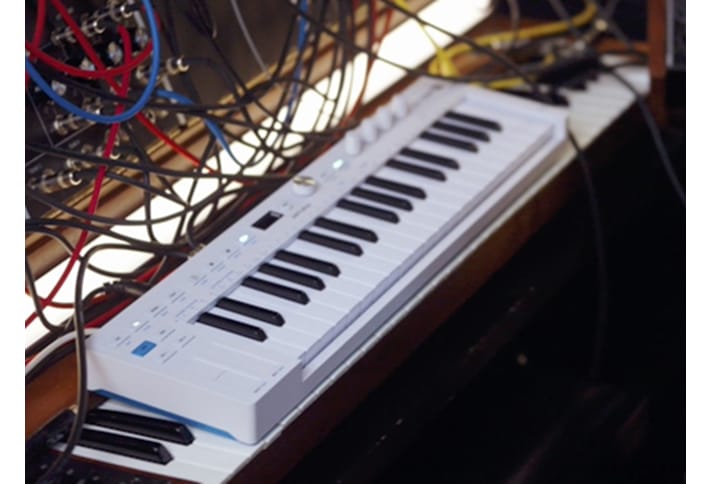
He also highlights the ribbon controllers as interfaces that invite a certain engagement when performing. This is key to the way the instrument feels overall: even though it’s “only” a controller, it can still shape the sound-making process by changing how you play, how you think, and what you try.
Even though it only is a controller, these things also can shape a lot the way how sound is actually being made.
In session: a downtempo jam
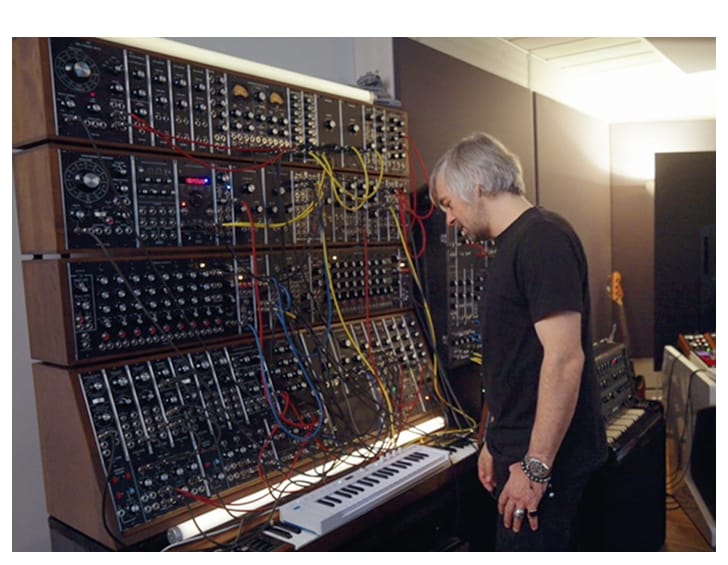
The demo brings those ideas into focus through a downtempo electronica flow fusing KeyStep 37 mk2, modular, and a gradually expanding arrangement with the aim being to start simple, then let the details speak for themselves.
The first goal is a bassline. Rather than overcomplicating the source pattern, he starts with something minimal and stable, a straightforward phrase that leaves room for variation.
My experience for basslines is that they are the best when the main ingredient is actually quite simple and then there’s some nice little twist to it.
That twist arrives through performance and interaction: arpeggiator behavior, evolving notation, and the kind of controlled unpredictability brought out through KeyStep’s generative functions. Around it, he layers groove and atmosphere, percussion, pads, and additional parts, gradually widening the frame while preserving the original pulse.
This is exactly where KeyStep 37 mk2 makes sense in the context of Hannes’ broader workflow. It becomes the catalyst that introduces movement, variation, and playful constraints, turning a familiar setup and musical starting point into something much more.
A personal connection
Hannes returns to a few core ideas again and again: sound as a fundamental material, flow as a state where self-consciousness drops away, and experimentation as a way to keep creativity alive over the long term. Some of his strongest work, he says, came from making music quickly, for the fun of it, without overthinking outcomes.
That sits alongside his wider philosophy. He values tools that earn trust through quality, evolve over time, and support a workflow without dictating it. Whether he’s mixing for others, building his own productions, or experimenting to gain new inspiration, the goal stays the same: stay open and keep pushing the work somewhere meaningful.
What stands out to me is that regardless of where you look it’s always quality.