
Matrix-12 V
实现可编程的模拟合成自由。
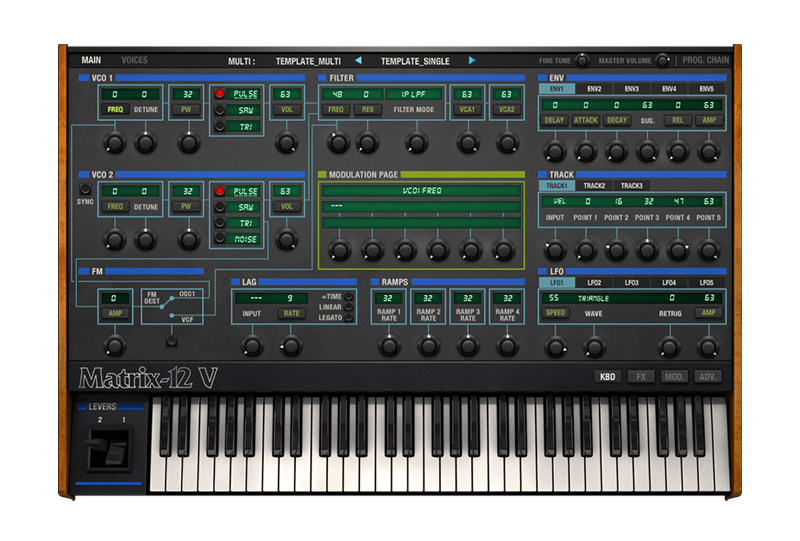
Matrix-12 V 以软件形式复活了第一款可编程模拟合成器,增强了其备受推崇的模块化灵活性、模拟丰富性和 15 模式滤波器的组合,具有巨大的创作自由度。
Enter
the Matrix
Extreme patching met 12 dual-oscillator voices in one of the most prestigious keyboard synths of the '80s.
With 27 modulation sources, 47 destinations, 15 filter modes, and five envelopes, it combined the flexibility of a modular synth with the polyphony and programmability demanded by artists like Toto, Vangelis, Prince, and Herbie Hancock. How do you improve upon such an instrument? Matrix-12 V balances absolute authenticity with the flexibility modern music makers need - and then some.
You Can't Sample This
Our True Analog Emulation® technology models the behavior of every circuit and how they interact. Matrix 12-V is one of its biggest achievements yet.
Your Everything Synth
Whether you make power-pop, electronica, R&B, hip-hop, or a fusion of styles yet to have a name, Matrix-12 V delivers head-turning sounds with remarkable ease.
An Ace in Your Hand
The Matrix could sound like virtually every other analog polysynth of the '80s — and some digital synths — but no other synth could sound like the Matrix.
Own a Legend
A working Matrix-12 fetches five figures if you can find one. Matrix-12 V offers perfect accuracy at a tiny fraction of the cost, and with modern stability.
Analog in
a digital world
With digital synths like the DX7 and affordable sample-based keyboards just over the horizon, Tom Oberheim and company set out to show the world what a no-holds-barred analog machine could really do.
Echoing Oberheim's earlier success with the SEM, the project began with a sound expansion module. This was 1984's Xpander, which had six voices and the same signal path as the Matrix-12, which would arrive just a year later.
MIDI created a market for modules that could augment the capabilities that synth players already owned without adding the bulk of another black-and-white keyboard to their rigs. The Xpander was designed by engineers Marcus Ryle (who would later invent the Alesis® ADAT) and Michael Doidic, and became an instant hit.
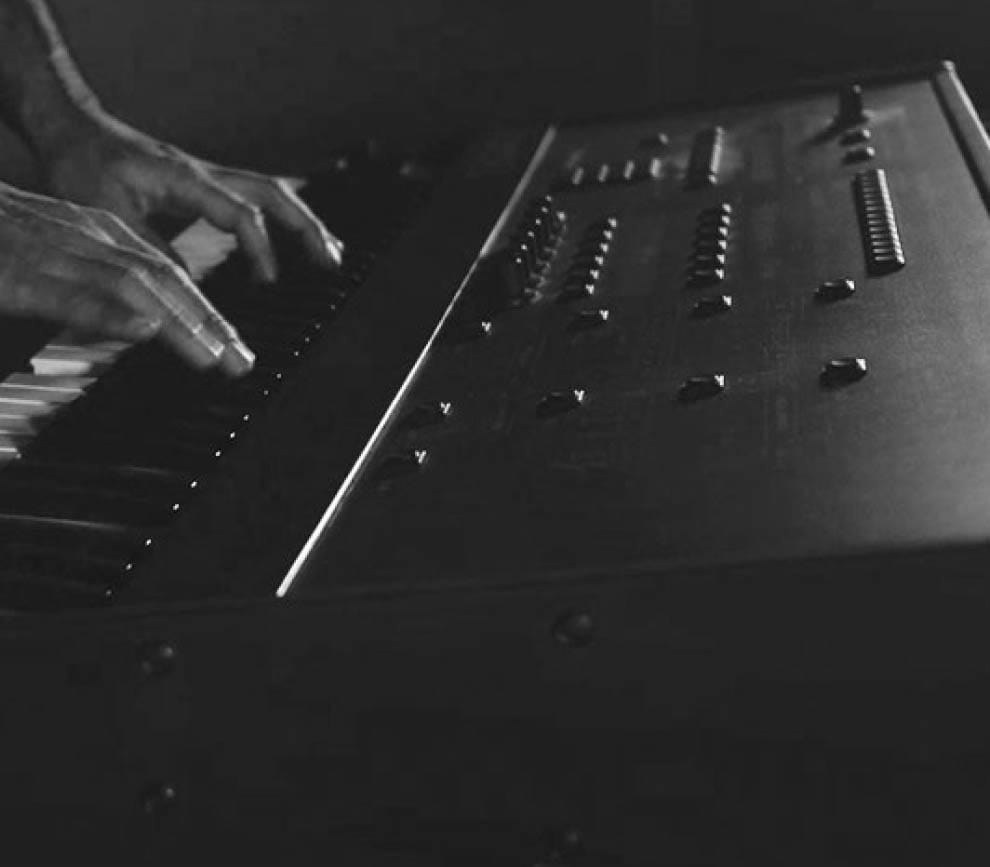
In part this was simply because it sounded so good and had a far deeper modulation matrix than anything ever seen in a self-contained "slab" synth. But there's also the fact that MIDI was new and the talk of the industry, and touring and session keyboardists wanted to advertise that they were now MIDI experts. Stacking an Xpander with your trendy DX-based setup was a bold way to make the statement.
This gave the Oberheim team confidence in the demand for a stand-alone, beefed-up take on the Xpander, and the Matrix-12 was born. It essentially fused two Xpanders with a velocity-sensitive keyboard that also sensed release velocity — a first at the time. It had all the analog fat for which Oberheim was famous, but could produce articulate bells, plucked sounds, wind instruments, and crystalline timbres that otherwise drew players to digital synths. It also didn't hurt that 12 voices raised the bar from the "pro" standard of six or eight.
Its price of nearly $6,000 made it an option only for accomplished professional musicians and studio owners, but they flocked to buy it and approximately over 1000 units were sold. Many are still in use to this day and it's rare to find an owner willing to part with theirs - that's where Matrix-12 V comes in.
Agent
of analog
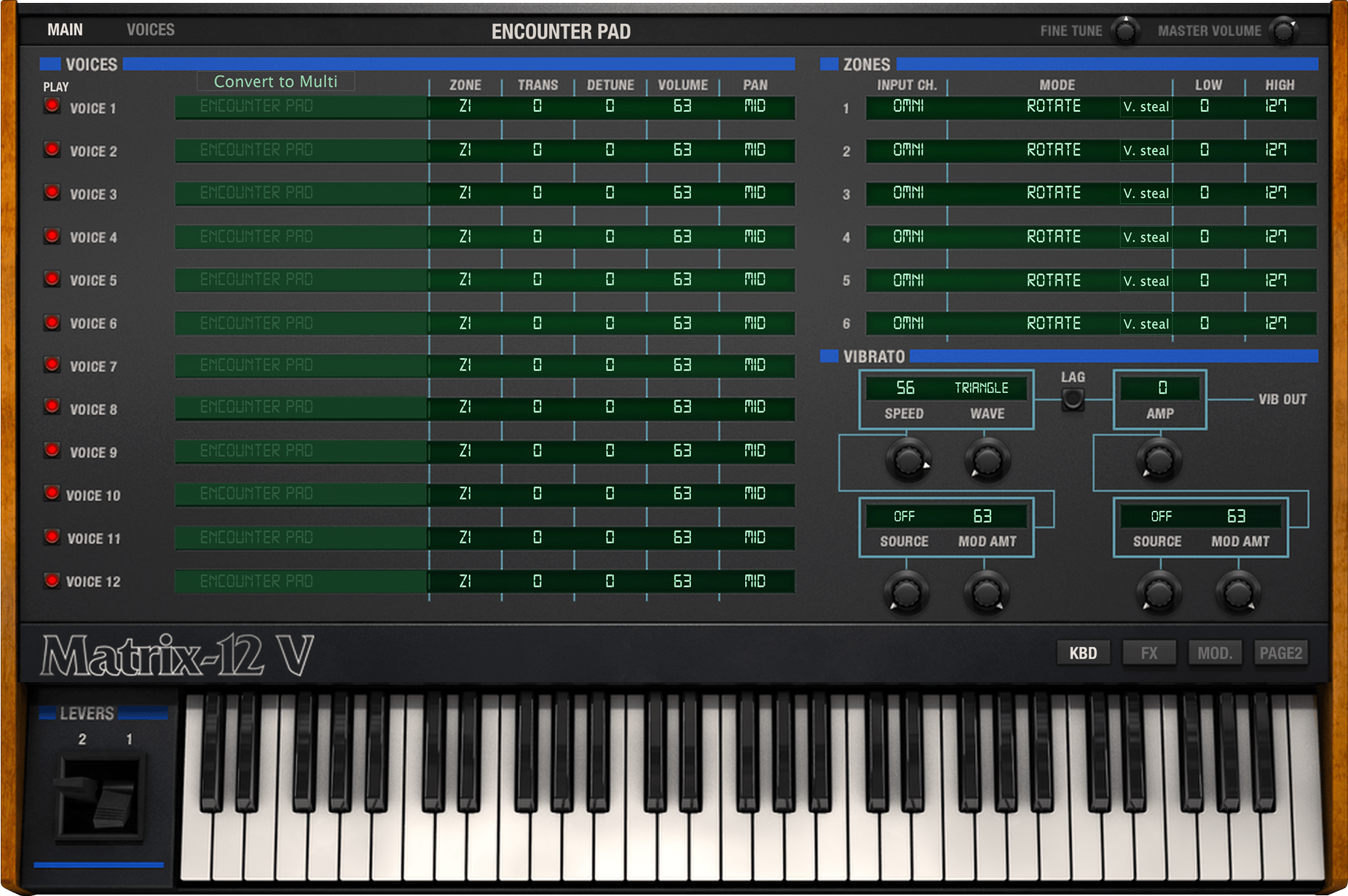
Matrix-12 V puts your hands on more of the original's parameters at once.
It's a playground for quick tweaks during live performance and exacting sound design in the studio.
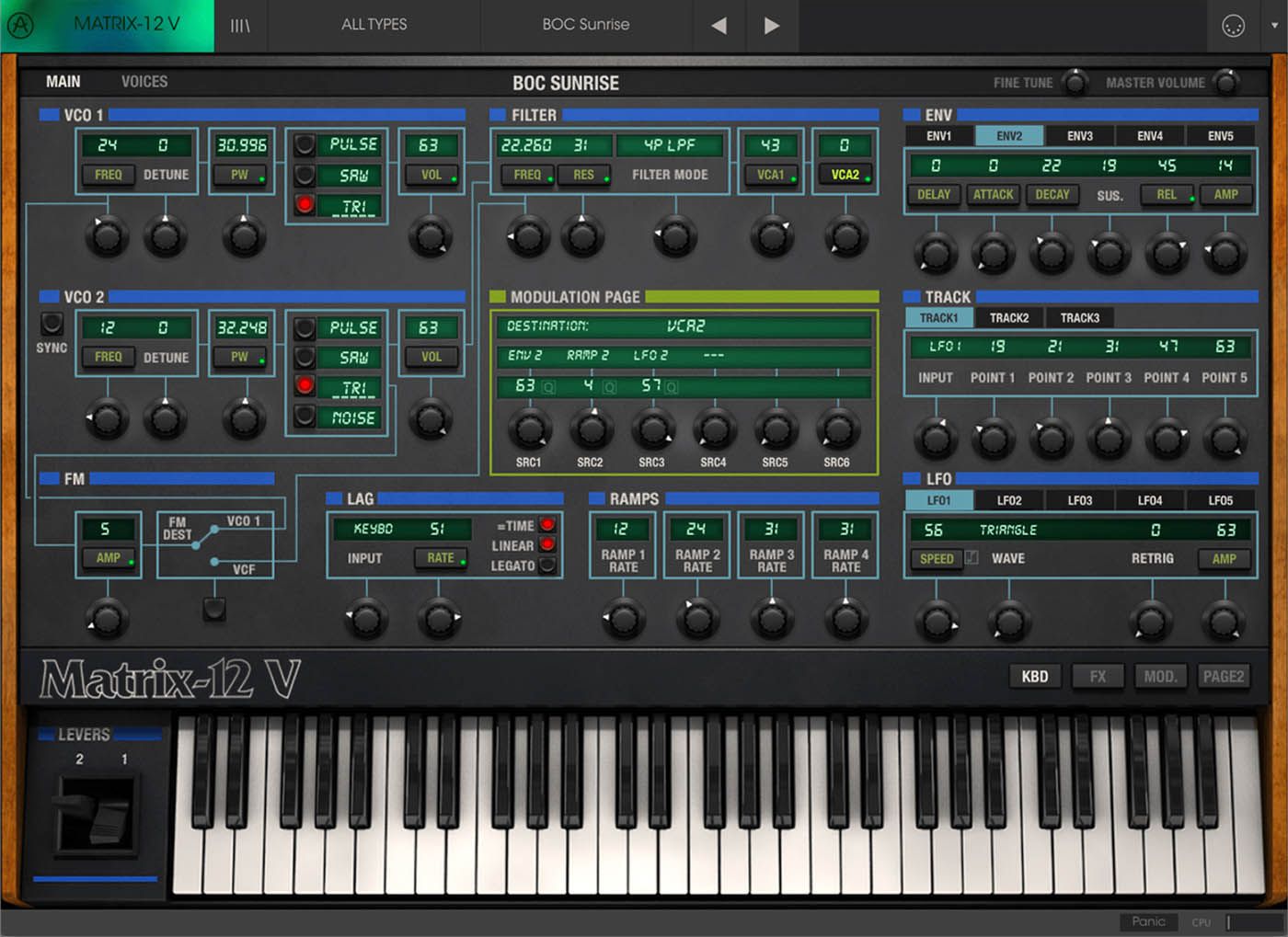
Because it applied digital control to analog tone generation, the Matrix-12 had three displays and many pages of functions but only six knobs. We thought a sound engine this sensational deserved a lot more.
_1
_2
_3
_4
_5
_6
01. Original Oscillators
We began with faithful models of the oscillators, which feature pulse, saw, and triangle waves, PWM, hard sync, FM, and noise.
02. 15 Filters in One
That's right — multiple pass modes, multiple slopes, and even phase-shifting filters let the Matrix create tones other analog synths can't.
03. Pushing the Envelope
Why settle for just volume and filter envelopes when you can have five assignable ones? Create sounds that evolve in interesting and unexpected ways.
04. LFO Flexibility
Explore 5 tempo-syncable LFOs ready to apply to anything - and that's just the tip of Matrix-12 V's modulation iceberg.
05. Modulation Central
Press any parameter's button to see all the sources that modulate it, and work with up to six sources at once.
06. Ramp It Up
Four ramp processors are like extra one-stage envelopes you can apply to any signal.
Matrix
Reloaded
More modulation, built-in FX, and a powerful Multi mode make you the architect of amazing sounds.
We dove deep into what makes the Matrix-12 special, put every parameter of it within easy reach, and then freed its analog mind with some reality-bending upgrades.
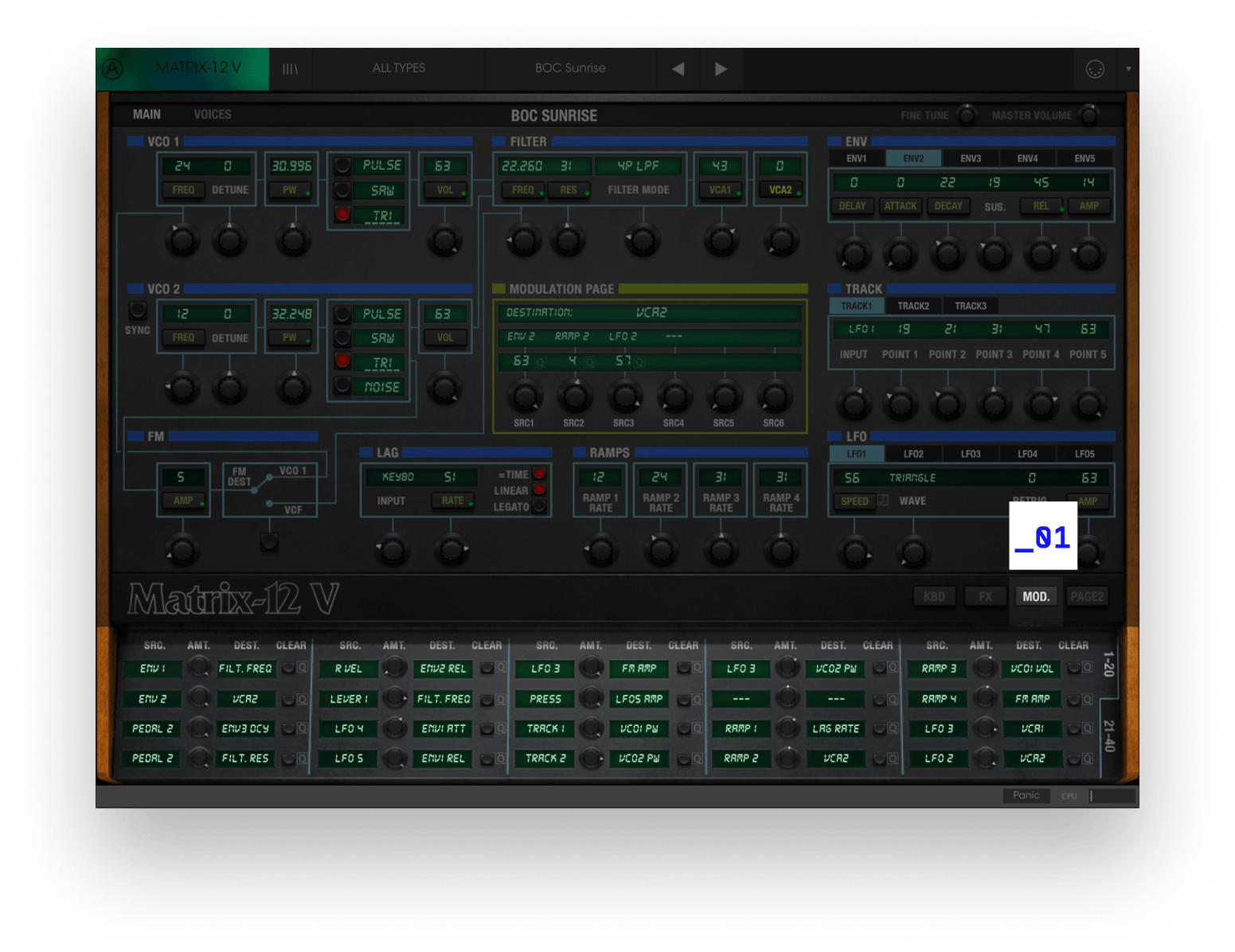
Master Your Mods
Tweak a superhero's eye view of every modulation routing in Matrix-12 V at once. With up to 40, you'll never run out of them.
Hear it
in action
Journey from the neon-lit streets of the 1980s to off-planet colonies and beyond with these audio demos from our community of artists and sound designers, made exclusively using Matrix-12 V sounds.
Escapes
In The Matrix
Selecting Presets
Trap
Rifts
A downtempo track with strong eerie feeling, taking advantage of the various filters modes, on board effects and voice parameters to fill the stereo width and audio spectrum.
Sunset
This minimalist demo features a light lead, the "Mountain Echo" preset, and a filter glide effect which take you to an other dimension.
Brian Molo
Artist
Corner
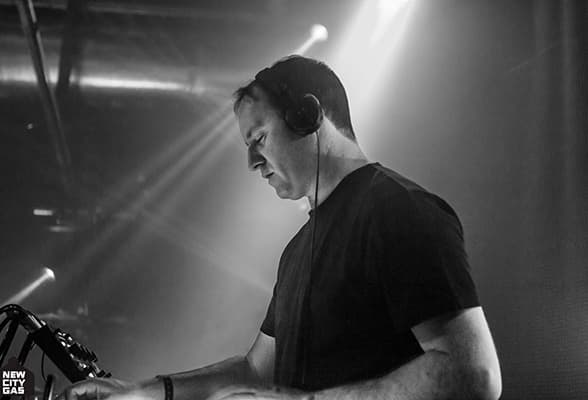
DJ Sasha
DJ / Producer
"With the Matrix 12 , Arturia has faithfully recreated a classic machine. Excellent sounds and great functionality! I look forward to adding these to list of Arturia products already featured in my studio set up."

Jason Miles
Producer - Composer
"Arturia continues to excel in making vintage synthesizers available as soft synths. Their latest Matrix 12 is a dream come true"

Jonathan Hart
Boy & Bear
"Matrix-12 V gives you all of the original mod options plus a bunch of new ones, a couple of really usable effects, and the filter modes sound really authentic too. It just sounds great and it sits in a mix the way great analogue synths do. "

Alex Lustig
Producer (Young Thug, Don Toliver, French Montana)
"Matrix-12 V gives some nice analog and interesting sounds, I love experimenting with it. "
Included in
V Collection 11 Pro
This instrument is part of V Collection Pro - a premium suite of software instruments designed for unparalleled sonic exploration.
From authentically modeled keyboards to hybrid synth engines and beautifully captured acoustic sounds, every instrument is enhanced for today’s production workflow - V Collection delivers the greatest keys of all time.
The features
you need
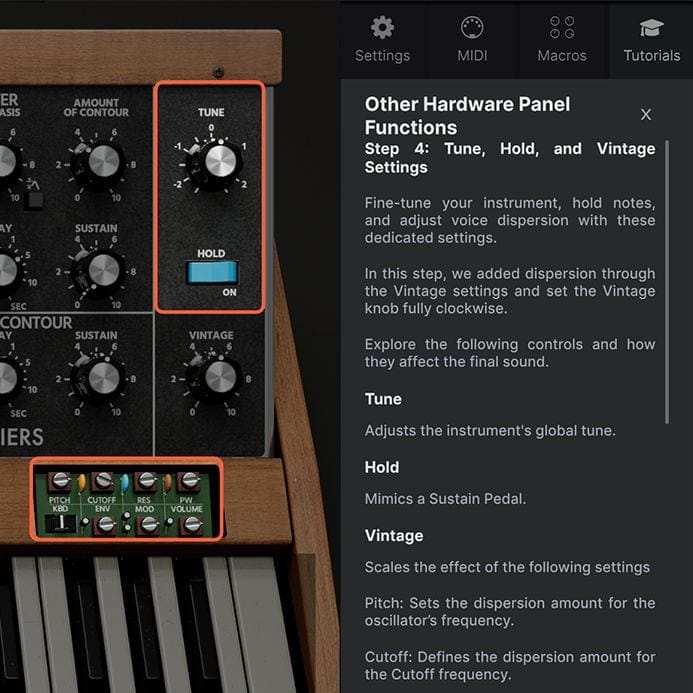
应用内教程
集成的应用内教程会引导你了解乐器的各个方面,从单个参数到我们的声音设计师的提示,让你可以专注于创意工作。创作本就该这么简单!
TAE® Powered
The exclusive analog modeling technology that makes our emulations indistinguishable from the originals.
By accurately mimicking the characteristics of analog oscillators, filters, and soft clipping, we can provide astonishing component-accurate detail and authentic analog charm in equal measure.



Main Features
Two oscillators, each offering triangle, sawtooth and variable-width pulse wave with PWM.
Oscillator 2 also functions as a white noise generator.
Oscillator 1 or the Filter can be frequency modulated.
Single filter with 15 modes: 4 Low Pass, 3 High Pass, 2 Band Pass modes, Notch and Phase Shift plus four additional "combo" filter modes.
Ultra-powerful modulation matrix with 27 sources and 47 destinations.
Sources include 5 envelopes, 5 LFOs, 4 Ramp, 3 Track generators, Velocity, Pressure, Keyboard follow, and more.
Two insert effect slots with six studio-grade effects available.
12 voices of polyphony like the original instrument
Multitimbral
Platform Specifications
Windows
- Win 10+ (64bit)
- 4 GB RAM
- 4 cores CPU, 3.4 GHz (4.0 GHz Turbo-boost)
- 3GB free hard disk space
- OpenGL 2.0 compatible GPU
- ARM processors not supported on Windows
Required configuration
- Works in Standalone, VST, AAX, Audio Unit, NKS.





Apple
- Mac OS 11+
- 4 GB RAM
- 4 cores CPU, 3.4 GHz (4.0 GHz Turbo-boost) or M1 CPU
- 3GB free hard disk space
- OpenGL 2.0 compatible GPU
Work with ASC
- An elegant and simple solution to help you install, activate, and update your Arturia software instruments.
Oberheim® is a registered trademark of Tom Oberheim®, which is in no way associated or affiliated with Arturia. All manufacturer and product names mentioned on this page are trademarks of their respective owners, which are in no way associated or affiliated with Arturia. The trademarks of other manufacturers are used solely to identify the products of those manufacturers whose features and sound were studied during the development. All names of equipment, inventors, and manufacturers have been included for illustrative and educational purposes only, and do not suggest any affiliation or endorsement by any equipment inventor or manufacturer.