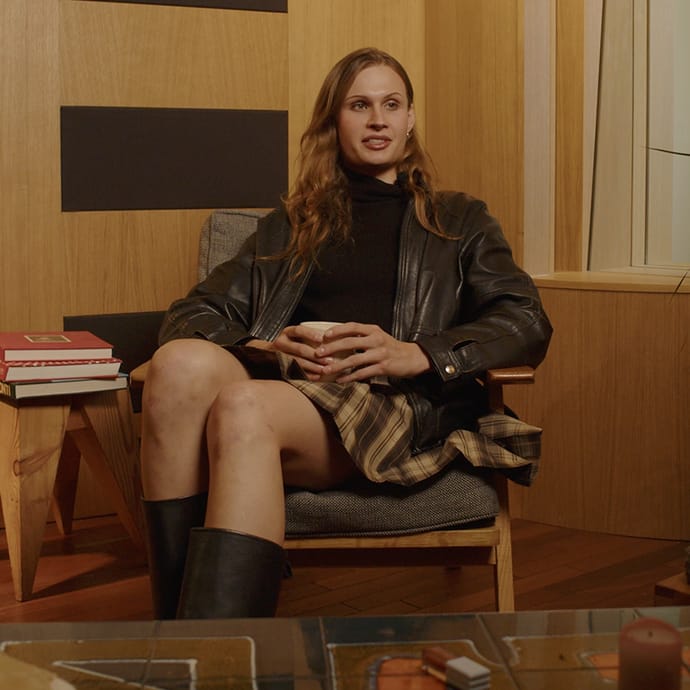
Jenys
Instinct-led sound design with Pigments
Jenys is a Russian-born, Paris-based producer and artist whose work fuses crystalline IDM with glitchy hyperpop and harsh, deconstructed club textures. Her productions are assertive, meticulous and framed by genre-colliding sound design, with vocal delivery that commands the room. Following the release of an acclaimed debut EP Dive Urgent and landmark show at La Cigale, she continues to build a reputation for a sound that always looks to break the rules.
We sat down with Jenys to watch her process unfold in real time, tracing how she starts from a blank canvas, stacks texture through granular layers and open modulation, and arrives at bass-heavy, beat-driven sketches shaped by intuition and feel.
From curiosity to conviction
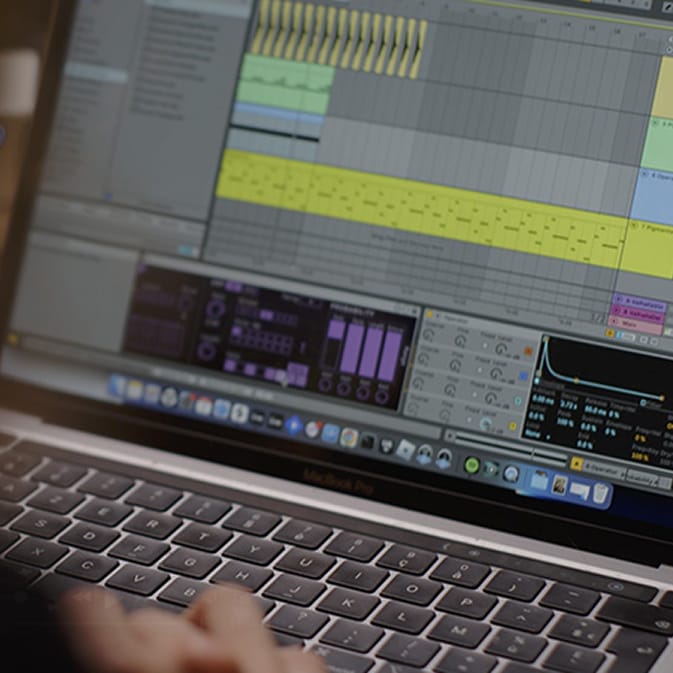
Jenys's introduction to music production came at twelve, watching her cousin compose on a laptop. While annoying and repetitive in the moment, this early exposure had an impact and she went on to teach herself the basics in FL Studio and later Ableton Live - beginning a process of trial and error that still defines her approach: try the unfamiliar thing, see what it does, and trust the result if it sounds right.
She studied at the University of Cinema and Television in St. Petersburg, where music went from a private outlet to something more central to her work. A private music teacher compressed years of theory into a short, intensive period, but the production knowledge came from the likes of YouTube, Reddit, and hours spent inside synthesizers. After moving to Paris, access to professional studios and hardware deepened her experience and palette, but the instinct to work from scratch remained constant.
I guess I'm just like breaking the rules. Why won't I do this? Why haven't I ever done that?
Dive Urgent: a serious statement
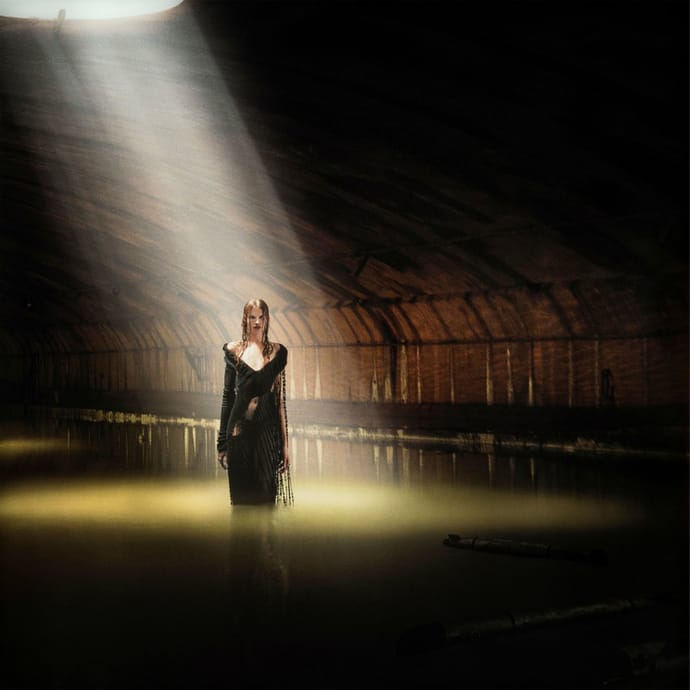
After settling in Paris, Jenys released Dive Urgent, a six-track EP that she describes as her first serious statement in the international music industry. The record moves through deconstructed club, IDM, drum & bass and pop with each track being defined by contrasts. Aggressive production sits alongside vulnerable lyrics and saturated bass design opens into wide, airy space. The writing is personal and confrontational, drawing on experiences of displacement, nightlife, girlhood, and resilience.
Her approach to production mirrors the emotional range: she doesn't plan the outcome, but rather follows her instinct. The result is fresh and spontaneous, a collage of extremes where friction becomes cohesion and intensity begets delicacy.
I never plan my artworks. At this point I tend to trust my inner instincts and intuition. These are my most reliable allies.
Pigments as blank canvas
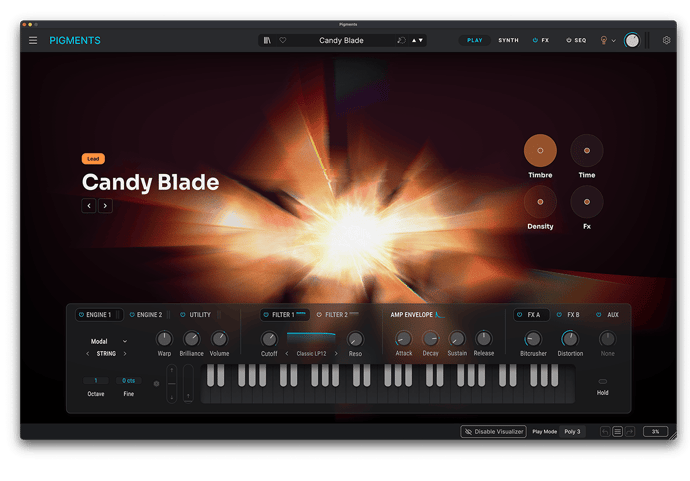
Jenys always starts from scratch. Where some producers browse for a starting point, she opens a blank initialisation and builds outward and she's clear about why. The empty state activates something: a map of possibilities, connections to be drawn between islands. For her, Pigments' strength is the sheer capacity of that blank space.
What draws her in is the architecture. Five synthesis engines — analog, wavetable, sample, harmonic, and modal — sit alongside a granular mode and an open modulation matrix that makes assigning LFOs, envelopes, and function generators as simple as drag-and-drop. Six oscillators, multiple envelopes, and an extensive effects chain mean the instrument can move from a basic waveshape to something dense and unpredictable.
She highlights the workflow as much as the sound, with a layout that feels logical and routing that is animately visible. Even coming from other wavetable and FM synthesizers, she was able to learn Pigments without relying on tutorials, something she values especially for those who learn by doing rather than instruction.
Flexibility and capacity. Pigments is capable of doing 1 million twigs and interconnections between the blocks. Numerous LFOs, envelopes, redirections, oscillators — six oscillators. Crazy.
In session: building toward a bass-heavy sketch
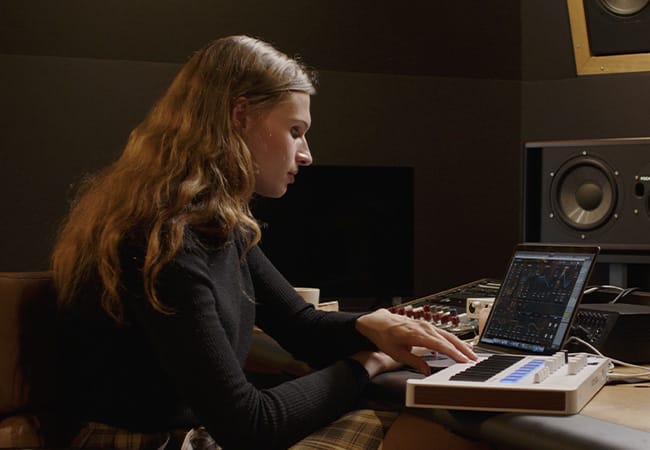
The demo starts with fundamentals: a wavetable source widened with extra voices, shaped into a tight pluck, then brought to life with a low-pass filter sweep. From there, Jenys builds-out the sound adding some granular, pushing resonance until the tone shifts from a conventional key sound into something more tactile and reactive. Distortion and saturation follow, with subtle movement introduced via LFO modulation.

She then turns the patch into a playable phrase: the sequencer adds probability gaps, pitch offsets, and per-step timing shifts, while bitcrush, flanger, and OTT are used to fold-in additional character, widening the sound and pulling detail forward. A second Pigments layer opens into a harmonic-driven counterline, with LFOs reshaping the ratio and reverb size in real time. The result is a rough but coherent bass-led sketch: vivid yet unstable in the right places.
There's something so cool happening right now. I cannot even explain that. But it's just the texture is like everywhere.
The unreleased patch: one oscillator, maximum movement
We then pivot to an unreleased project that demonstrates how far a minimal source can travel in Pigments. The patch starts with a single analog oscillator and is complexified entirely through modulation. Multiple LFOs run at different rates, a randomiser drives the frequency of a comb filter, and the resulting sound shifts and reforms continuously without intervention.
The effects chain used is subtle: a touch of reverb, multiband compression, and hard-clip distortion at the end. For Jenys, this is the proof of concept that Pigments can produce evolving, richly textured sounds from a simple source, as long as you're willing to experiment.
I used only one oscillator and a bunch of LFOs with different rates, as well as a randomiser connected to the frequency knob on a comb filter.
A personal connection
For Jenys, music is the most direct form of meaning-making, a place where emotion can become structure, and a few seconds of sound can carry the weight of a whole memory. That’s why creative instinct sits at the center of her process and method. Follow the reaction, the inconsistencies and let the track reveal what it needs to be.
Pigments supports this because it keeps experimentation immediate. Starting from an empty patch, she can build quickly, reroute freely, and stay close to the original intent. In the end, the point isn’t perfection but a sound that feels unmistakable and a workflow that lets you get there unhindered.
You can just put your intuition in it and figure out how to do that. Even without any knowledge in music, any education — it's very accessible. Pure magic.