
Victor Le Masne is a French composer, producer, arranger, and musical director based in Paris. From co-founding electro-pop duo Housse de Racket to producing Parade, the official anthem of the Paris 2024 Olympic and Paralympic Games, his work spans electronic pop, jazz, classical writing, and large-scale scoring. For him, composing means finding a theme that can carry across contexts, with harmony, orchestration, and sound design emerging out of a core hybrid workflow.
We joined Victor at Motorbass studio in Paris to see how that process unfolds, and how sounds from CS-80 V, CMI V, Mini V, and his go-to Stage 73 V patches support everything from Olympic ceremony to recomposing classical works.
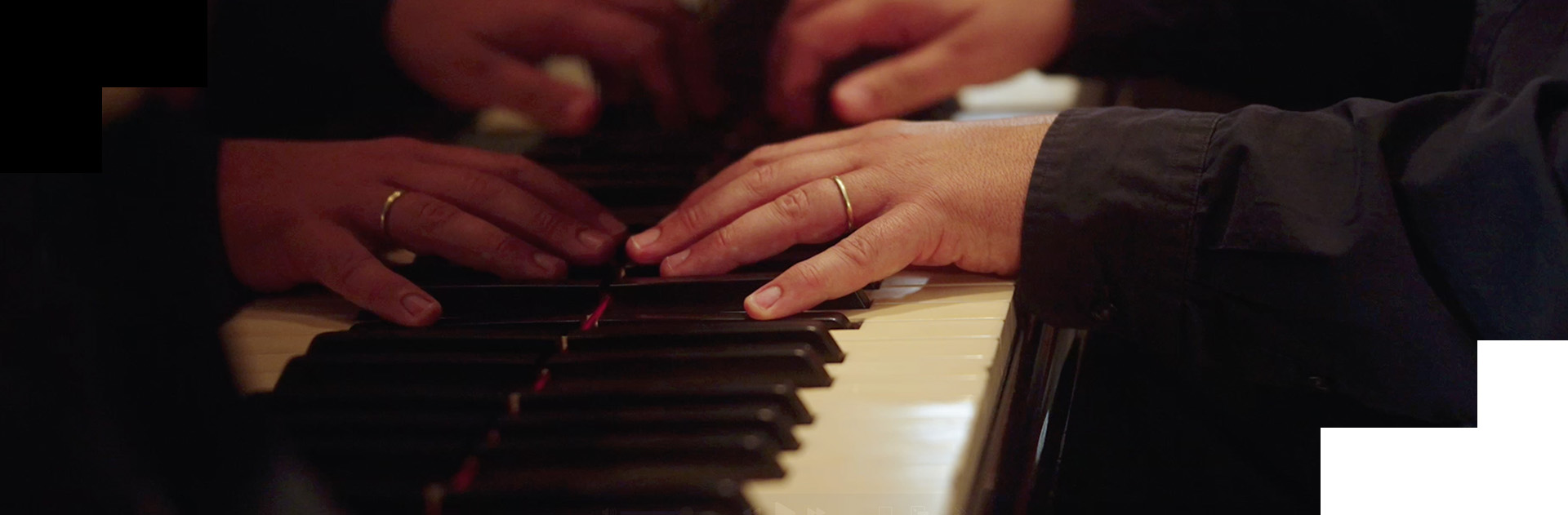

From conservatory roots to global ceremonies
Le Masne grew up in Paris in a musical family. His father, a flautist and conservatory director, ensured that instruments and practice were part of daily life. Formal training came early: classical piano, drums, and orchestral percussion such as marimba and timpani. That background still shapes his writing, especially his feel for harmony and orchestration.
At the same time he was drawn to pop, funk, and the emerging French electronic scene. In 2005 he co-founded Housse de Racket, an electro-pop duo that went on to release three albums, including Alésia, co-produced with the late Philippe Zdar. Tours took the band from Tokyo to Coachella, and hours in the studio at Motorbass deepened his interest in sound design and production.
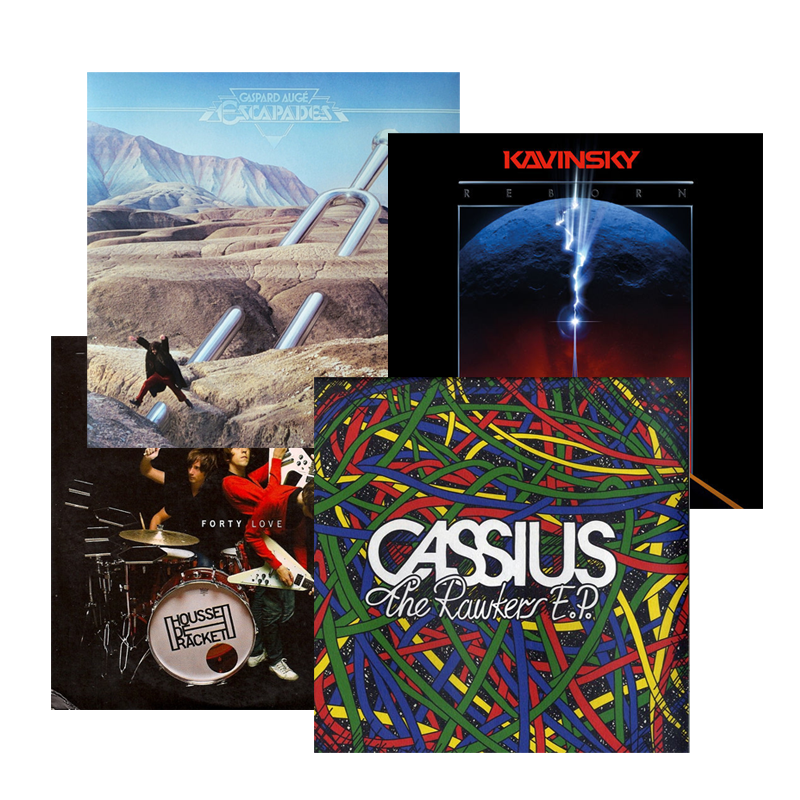
Alongside band work, Le Masne began collaborating with a wide range of artists, Kavinsky, Gaspard Augé, Juliette Armanet, The Weeknd, Lana Del Rey, Arcade Fire and more - in roles that moved between writing, arranging, and producing. In parallel, he took on theatre and musical direction, notably for the modern revival of the rock opera Starmania, where he reworked arrangements and helped shape a new live orchestral production.

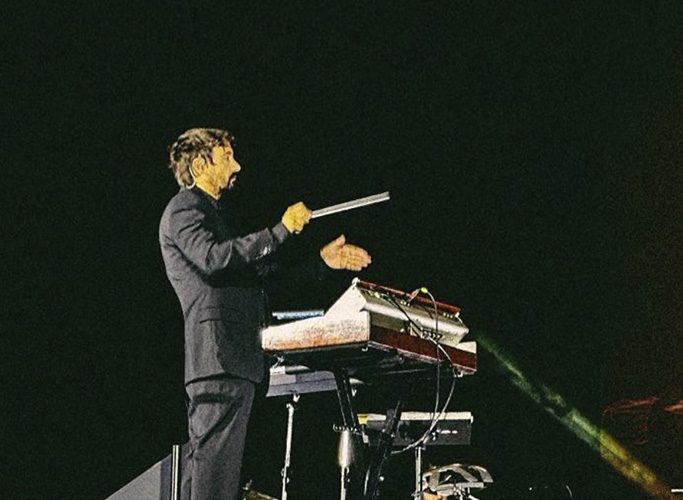
His relationship with the Olympic world started with a national symbol. For the Tokyo 2020 closing ceremony he was asked to arrange a new version of La Marseillaise for the handover between Tokyo and Paris, changing both orchestration and harmonisation. What could have been a one-off instead became a turning point, leading to his appointment as musical director for all four ceremonies of Paris 2024 and the composition of Parade, the musical anthem of the Games.
I’d been asked to do a new version of La Marseillaise… I changed all the orchestration, all the harmonization. I thought it would never happen, it was too punk. I think because I broke the rule, that’s why I had the job.

Motorbass workflow: from piano to presets
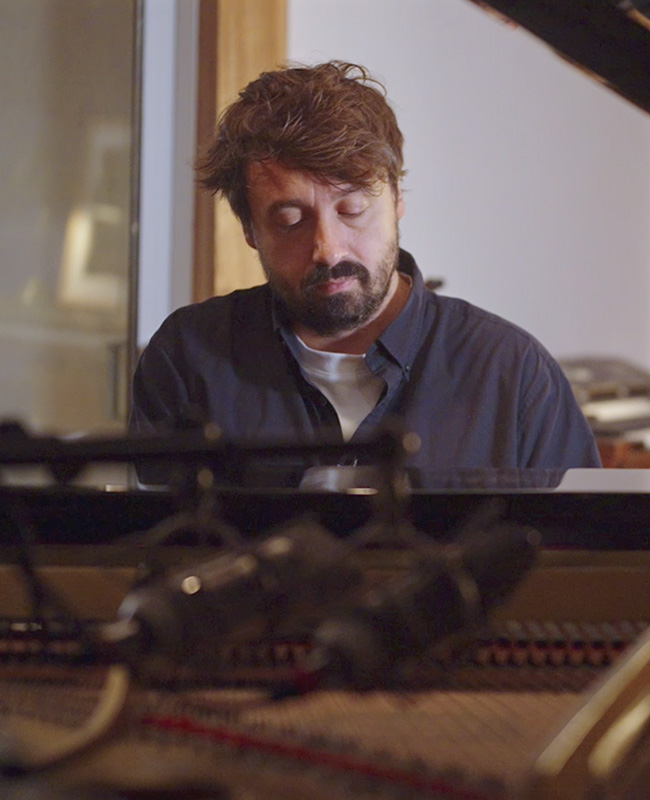
Most of Le Masne’s writing days at Motorbass follow the same pattern. He arrives early, sits at the piano, and plays for 20–30 minutes. There is no strict brief at that point, it’s about testing progressions, trying melodic shapes, and getting comfortable with the instrument.
When something stands out, there is little hesitation. He moves to his KeyLab mk3, records the idea as MIDI, and continues to work inside the computer. That shift from the real piano to a MIDI keyboard is central to his process. It lets him keep the feel of his playing, but immediately hear it through different timbres: a Rhodes, a synth brass, a pad, or a sampled texture. If an idea feels right, he can start layering new parts straight away.
My approach is to have fun with it.
V Collection as a trusted ensemble
With a fast workflow, V Collection acts like a familiar ensemble he can call on in seconds. Many of the sounds that appear in his sessions are presets he knows well and returns to for specific roles in the mix.
For chords and harmonic beds, he often turns to the Stage-73 V Rhodes preset called Smooth Jazz that gives him a warm, slightly ‘toto’ feel. It has enough character to define the colour of the piece while leaving room for other instruments. From there, additional layers can be built, a second keyboard voice, a synth string, or a counter-melody.

With CMI V and Mini V, he has two reliable anchors for the extremes of the spectrum: bright, high-register timbres that sit above the arrangement, and a clean, controlled sub that underpins it from below. Used together, they help frame the orchestral and band elements in the middle without overcrowding the mix.
Even with this range of instruments, he keeps his approach simple. Most of the time he takes a preset, adjusts only a few parameters if needed, and moves on. The creativity is in the choice and combination of sounds, not in endlessly reshaping them.
“In all my productions, there’s at some point some Arturia.”

Ravel recomposed: a new challenge
Beyond his work for the Games, Le Masne is also focused on a personal project that puts these tools in dialogue with one of his biggest influences: Maurice Ravel. His upcoming record, Ravel recomposed, is built around twelve pieces by the French composer, each approached in a slightly different way. In some cases the track functions as a variation on a familiar theme; in others it becomes a loop-driven re-imagining or a more unexpected transformation.
The common point is the mix of orchestra and synthesizers. Strings, choir, and woodwinds carry Ravel’s language, while synths from V Collection extend and support it. CS-80-style pads follow and reinforce the harmonic motion; CMI V adds light, high-frequency layers on top; Mini V underlines the bass and low percussion from below. By working with these extremes, the very high and very low, he can open space around the original writing while keeping its character intact.
For Le Masne, this project is a way to bring his classical training, his studio habits, and his experience on large productions into the same frame. It’s as much about respect for the source material as it is about seeing how far it can be stretched using modern tools.

Composition as sound world
Across his projects, from Parade to Ravel recomposed, Le Masne treats composition and production as one process. The musical idea and the final sound are decided together: theme, register, and texture all arrive at the same time.
Going between traditional composition tools and in-the-box instruments, he can move from a sketch to a finished sound in minutes, testing new tones and timbres along the way, with V Collection at the center as a practical way to turn his ideas and intuitions into a full arrangement.
Nowadays, I think when you compose, production is part of the composition also. You need to have the world of sound that you have in your ears right away.