
Solina V
正真正銘のオーケストラマシン。
1970年代を代表するストリングマシンが奏でる、うねるようなテクスチャに想いを馳せる。Arturiaの比類なきアナログモデリング技術が、このビンテージアイコンをアップデートし、オリジナルに美しく忠実でありながら、現代の音楽制作環境に合わせて巧みに強化されています。
String
Theory
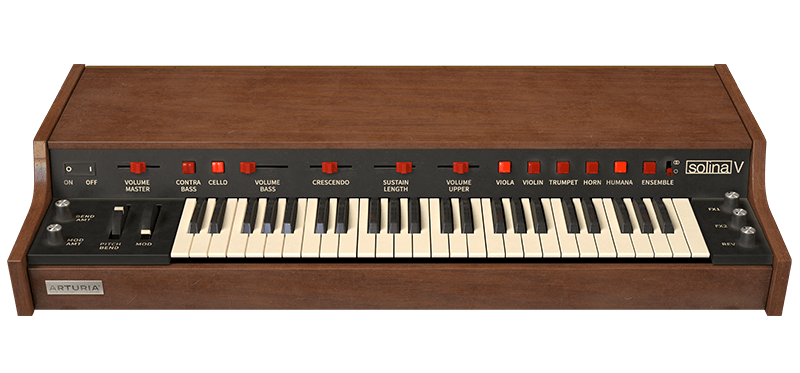
Solina V models the hugely popular ensemble keyboard made by Eminent and later rebadged by ARP.
Chillwave, vaporwave, nu-disco, old disco, ambient, classic funk, and even trance just wouldn't be the same without the gluey, cosseting vibe of analog string machines. Gary Wright, Jean Michel Jarre, Vangelis, Styx, The Buggles, and Parliament-Funkadelic all immortalized their sound.
The Original
We began by carefully studying the Solina Mk 1, then we created a detailed computer model. It doesn't get any more realistic than this.
Time Capsule
The Solina is heard on more '70s tracks than any other electronic keyboard, making it a must-have that no sample can duplicate.
Fits Your Mix
Put all the Solina's retro deliciousness in your tracks without the hassle of finding, maintaining, and recording vintage analog gear.
More Than Strings
Get the signature sound — then discover just how far beyond that you can go thanks to the advanced synth features we added.
Before polyphonic synths,
there were string machines
Needed a backing orchestra for your band? Far-out sounds to stack atop your electric piano? The Solina was your ticket.
Onstage, it opened up a new world of sound to keyboardists eager for options beyond piano, organ, and monosynth. In the studio, it brought real orchestration power to artists who weren't in the "just hire orchestra players" league. It became a staple of prog, funk, and disco. Its sound is as ear-catching today as ever.
The history of string machines goes back to the 1960s, when keyboardist Ken Freeman experimented with a Selmer Clavioline and multiple delays, hitting on a combo that made a solitary voice sound like a section. His Freeman String Symphonizer (a.ka. Cordovox CSS) sounded incredible but was neither first to market nor most popular. That honor would go to the Solina.
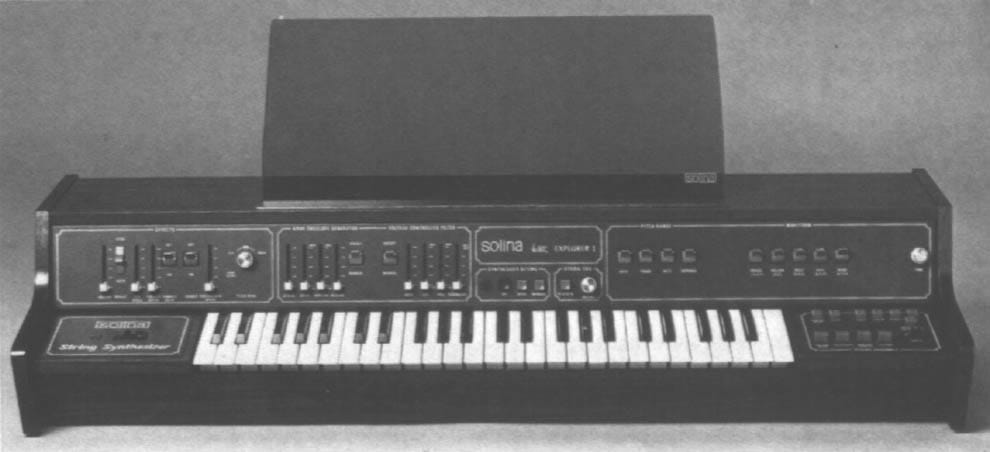
Dutch company Eminent deployed similar technology in their 310 series of home organs, which Jean Michel Jarre took onstage. They knew they were onto something that could work in a more portable keyboard, and in 1974 the Solina was born. It soon got the attention of American synth maker ARP, who licensed it and sold it as the ARP String Ensemble.
ARP was a known name in music, and artists including Styx, Gary Wright, Pink Floyd, The Buggles, and even Elton John paid attention. Disco strings of the era were either real or ARP/Solina. And if Bernie Worrell's left hand was playing bass on a Mini in classic P-Funk, his right was riffing on a String Ensemble!
Fresh
Out of the Box
Like a never-used Solina, only better.
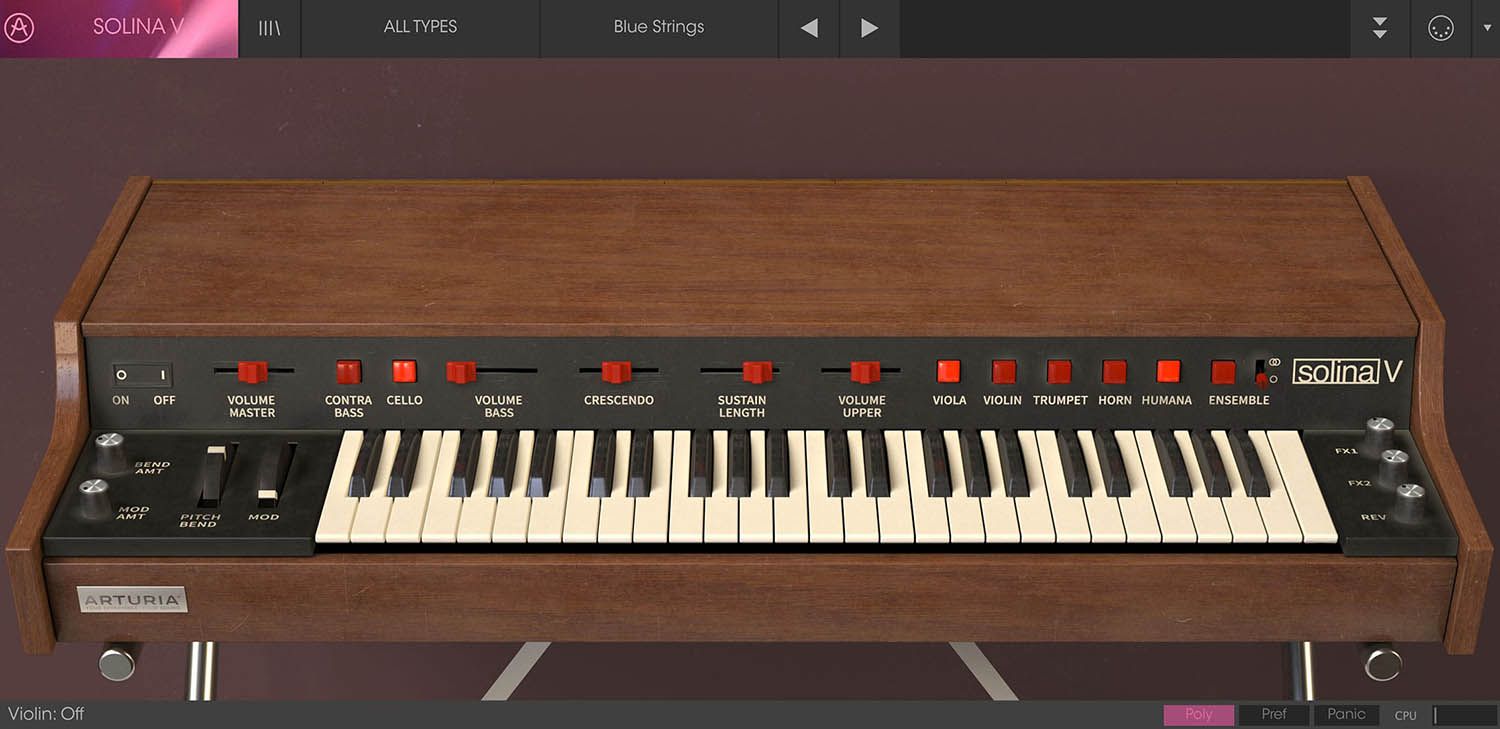
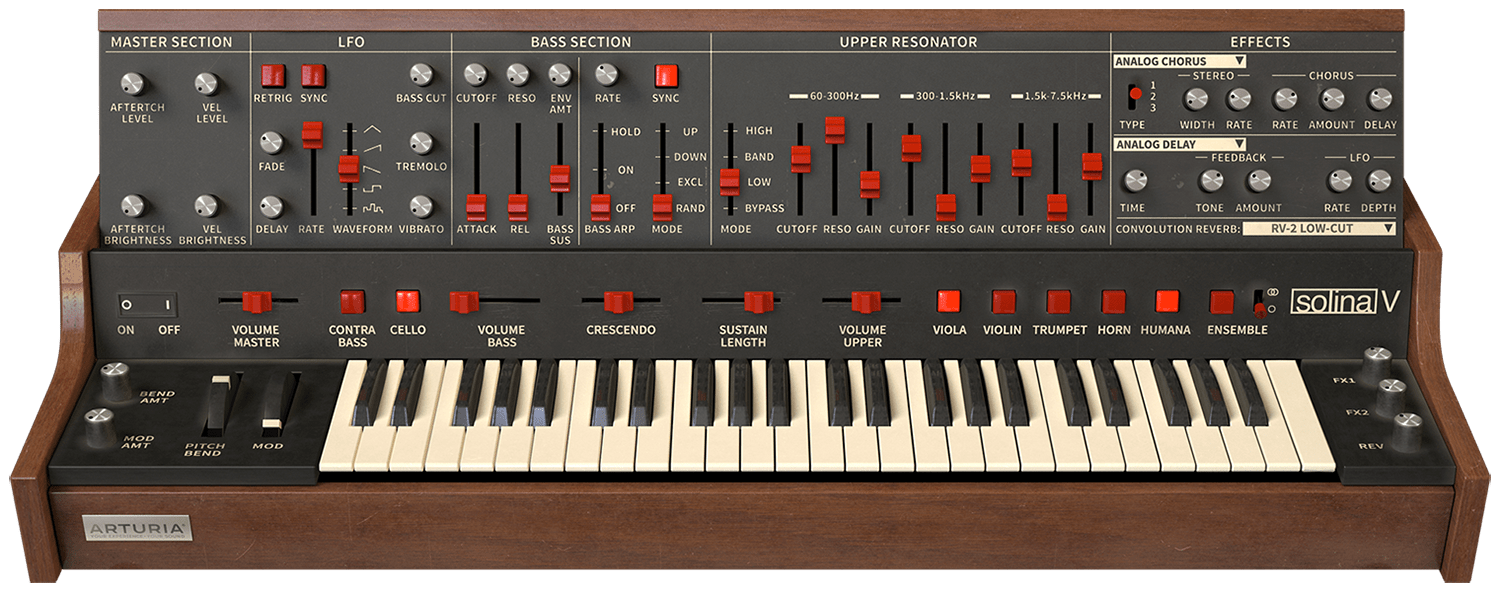
We've preserved the controls layout and paid homage to the look — and added just the right extras to elevate the Solina experience.
_1
_2
_3
_4
_5
01. Disco Infiltrator
Boogie down with the original Solina voices plus the classic Ensemble effect. Hit the stereo option for an even lusher sound.
02. Human Nature
Solina V borrows a sound from another famous polyphonic keyboard: the "Vox Humana" patch heard on "Cars" by Gary Numan.
03. Bass Is the Place
Split the keyboard and play bass in the left hand, either layered with the main sound or by itself.
04. Pitch and Mod
Solina V adds pitch and modulation wheels with adjustable depth amounts for more synth-like control over your sound.
05. Retro FX
Dial in period-perfect phaser, chorus, and delays, as well as a convolution reverb to put Solina V in a recording-ready space.
The Solina
Everyone Always Wanted
Heart of a string machine, brains of a synth
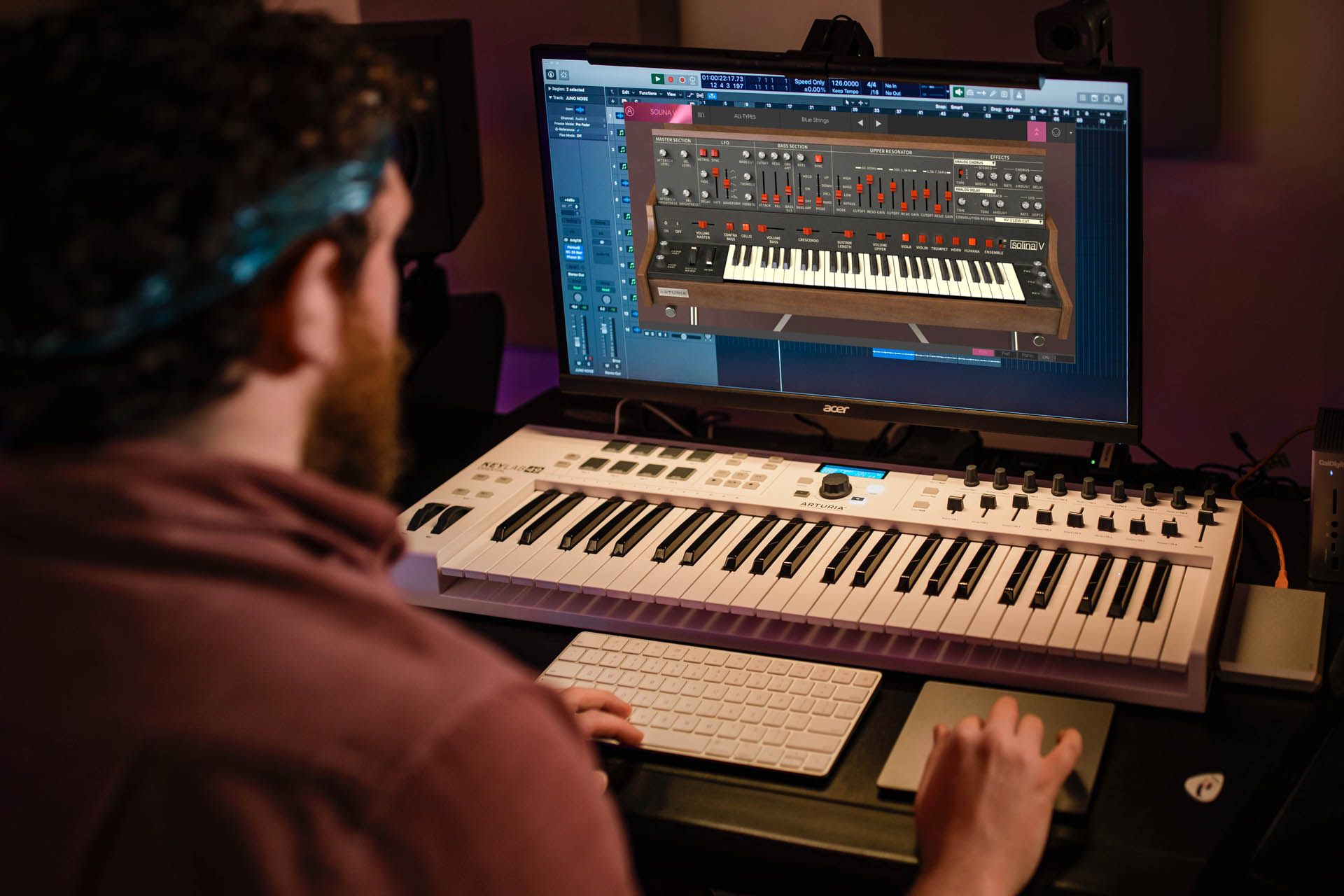
If Solina players longed for one thing, it was for their instrument to be more like a synth. Open up the Advanced Panel, and that's exactly what Solina V is. These features enhance your playing when you want them and get out of your way when you don't.
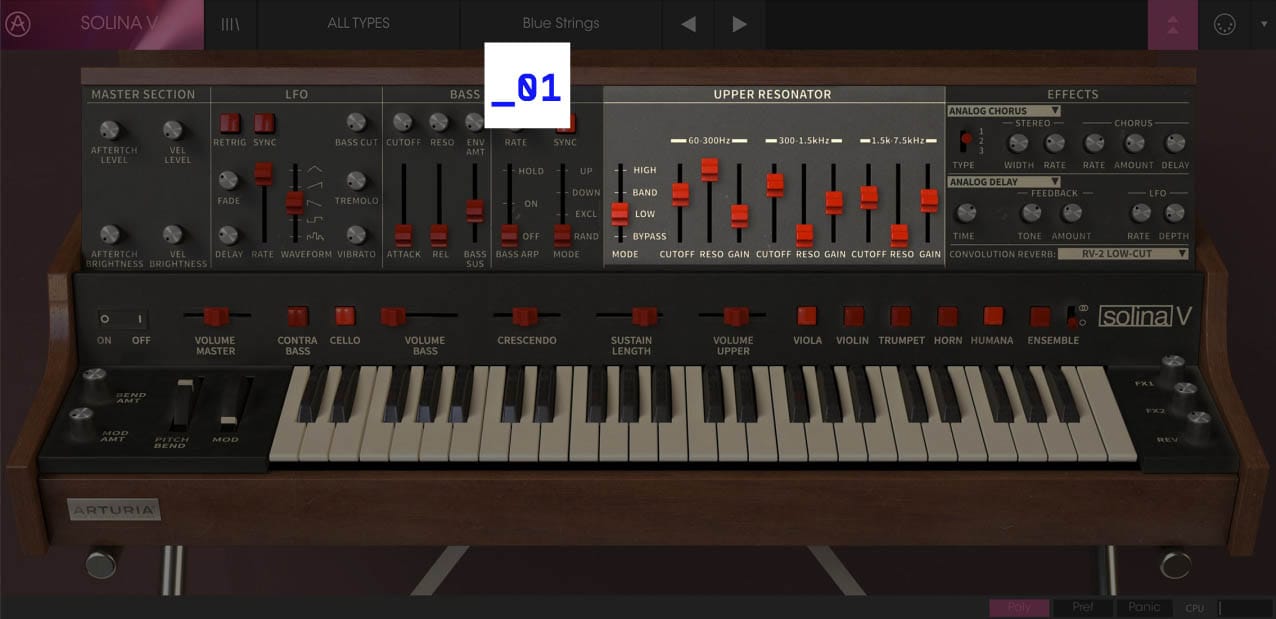
Resonators
This 3-band filter bank comes from the same "Poly" keyboard as the Vox Humana sound, providing surgical creative control over the frequency spectrum.
Hear it
in action
You know all about swirling pads and roller-disco string parts, but Solina V can have a far broader job description in your music.
These artists took its versatility for a test drive and came up with some tracks that prove our point.
Song for Jill
SDG
Pachelbel's Canon
All sounds are from Solina V.
Creepy Carrousel
All sounds except banjo and drums are from Solina V.
Demo
Chillax
All keyboard sounds are from Solina V. The backing track is the “Diamond Strings” preset. The lead is the "Fat in the Middle" preset by Erik Norlander.
Boardeau
Artist
Corner
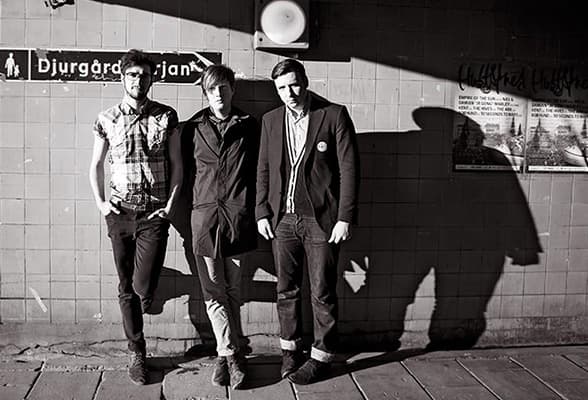
Kevin Baird
Two Door Cinema Club
"I've spent most of my life playing live with real analogue instruments I've found it so hard to replicate the warmth and fullness with software. Solina bridges that gap so perfectly I imagine my instruments will be gathering dust in my studio now!"

Richard Simpson
Coldplay
"The Solina in particular blows my mind. It’s lush and authentic, I’ve used the real thing on numerous records and this is the only emulation that I’d use."
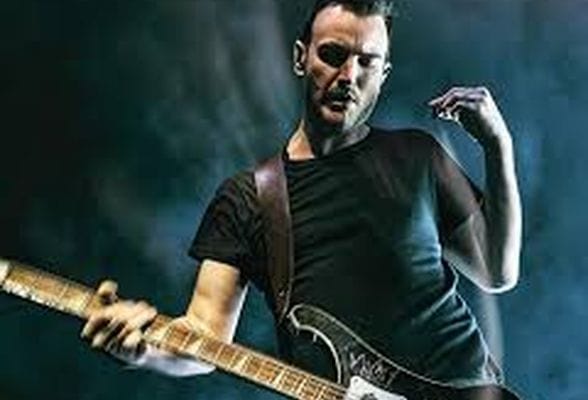
Paul Wilson
Snow Patrol
"I’ve never actually played this thing before and the first time I did was in the V collection. I realised what it was and thought: ‘Oh my god! That’s where these sounds come from!’ It’s incredible. "

John Nathaniel
OneRepublic / Kygo
"The Solina… we don’t hear enough about the Solina, but it’s so brilliant for retro pads! In the “Strings” presets folder, there’s so much gold and classic vibes!"
プレス
掲載
主な特長
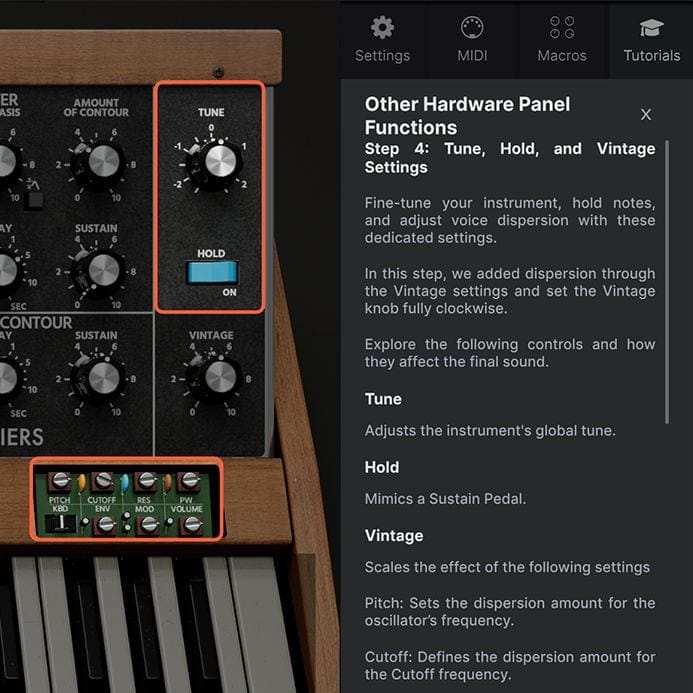
アプリ内チュートリアル
各パラメーターからサウンドデザイナーによるヒントまで、インストゥルメントのあらゆる側面について統合されたアプリ内チュートリアルがガイドしてくれますので、クリエイティブな作業に集中できます。こんなに簡単なことはありません!
ギャラリー
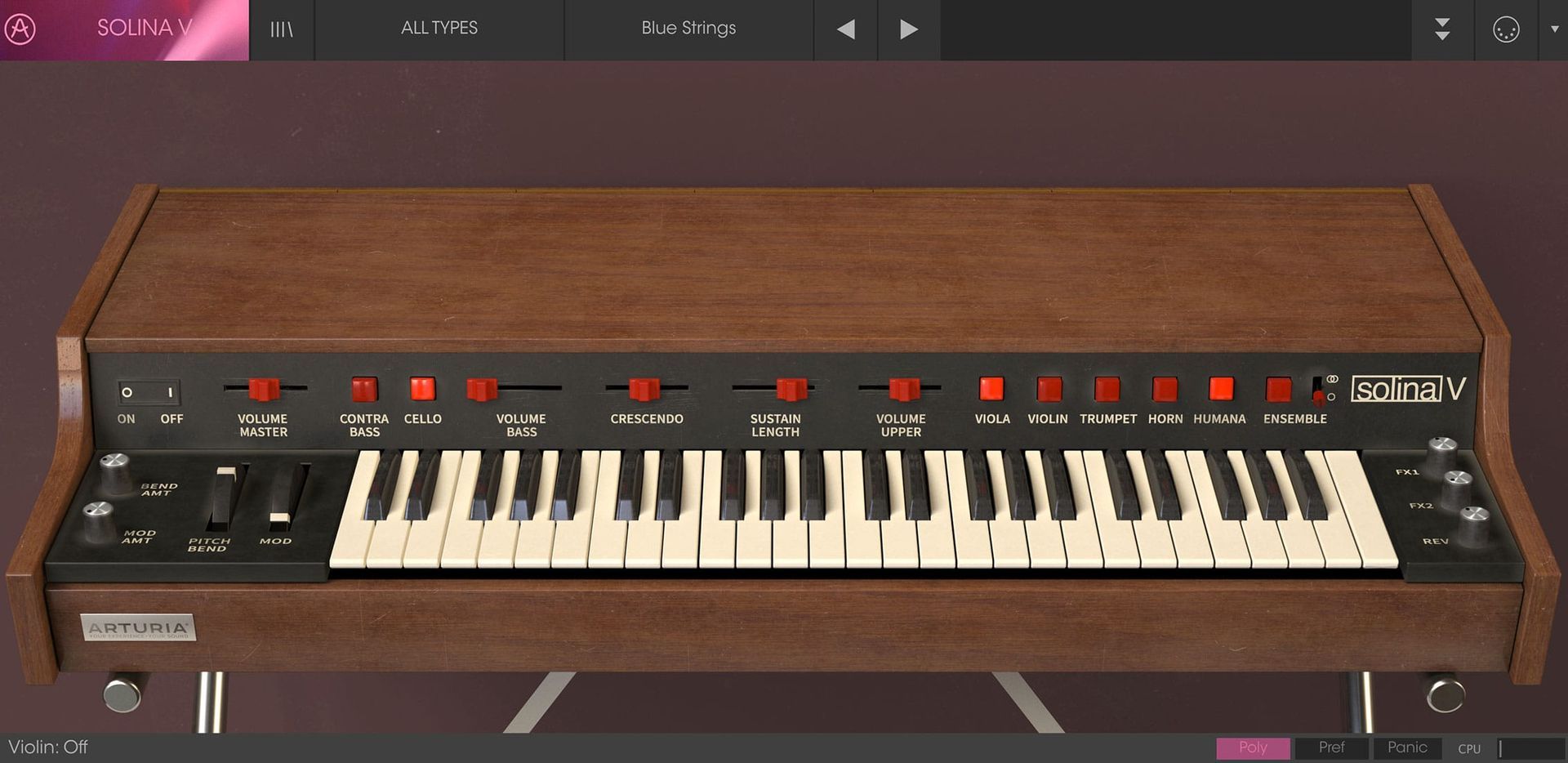
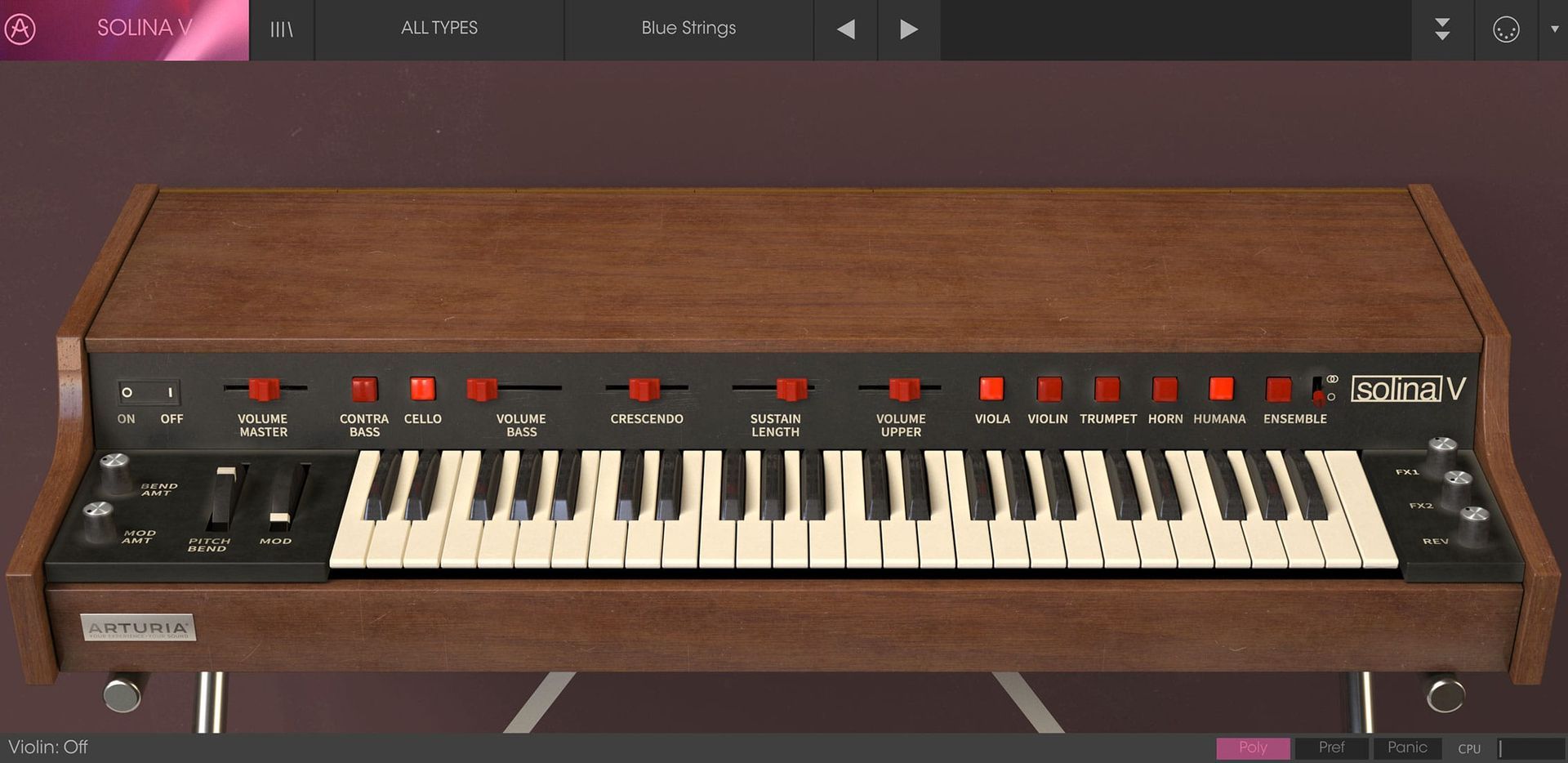
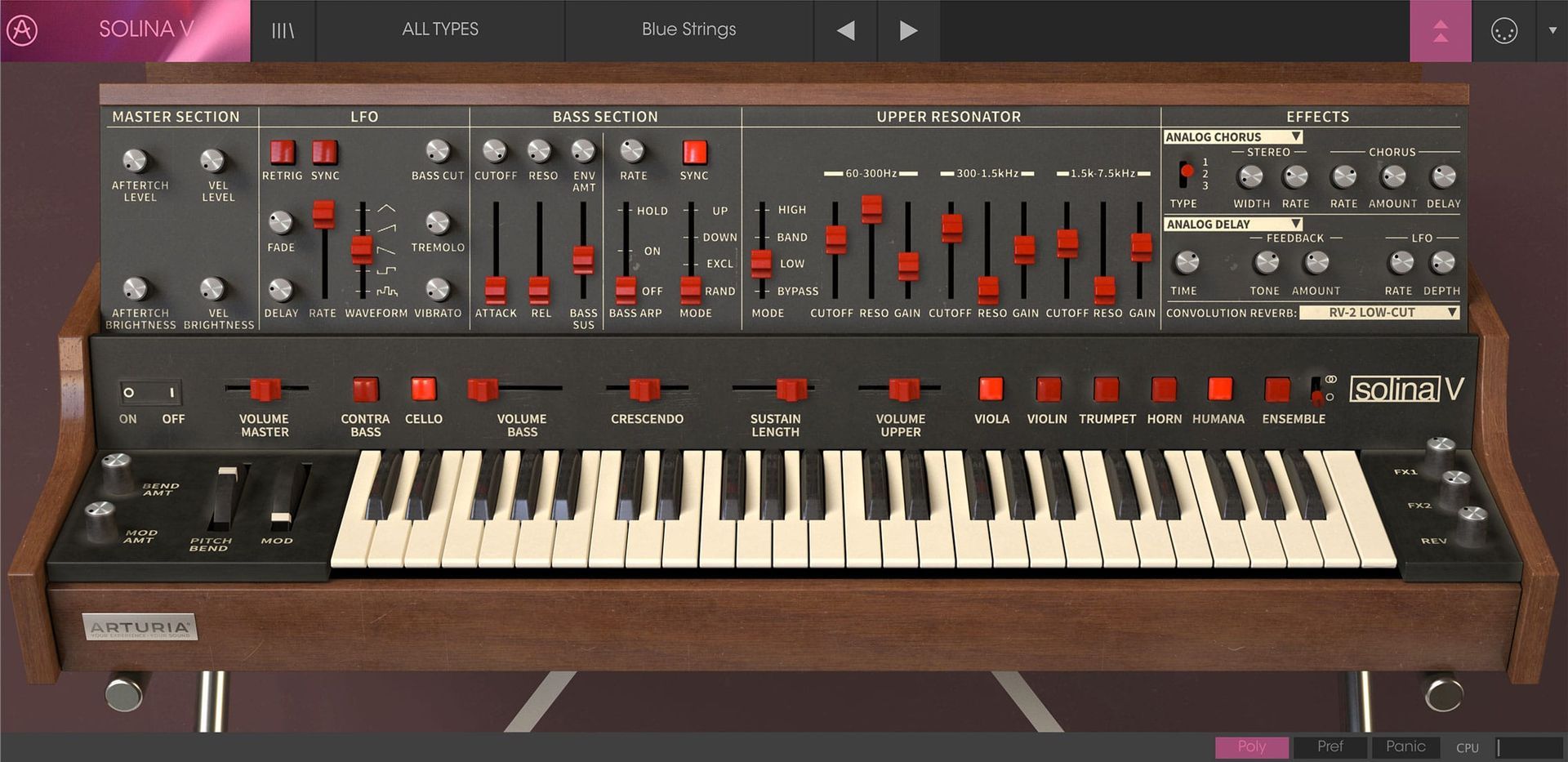
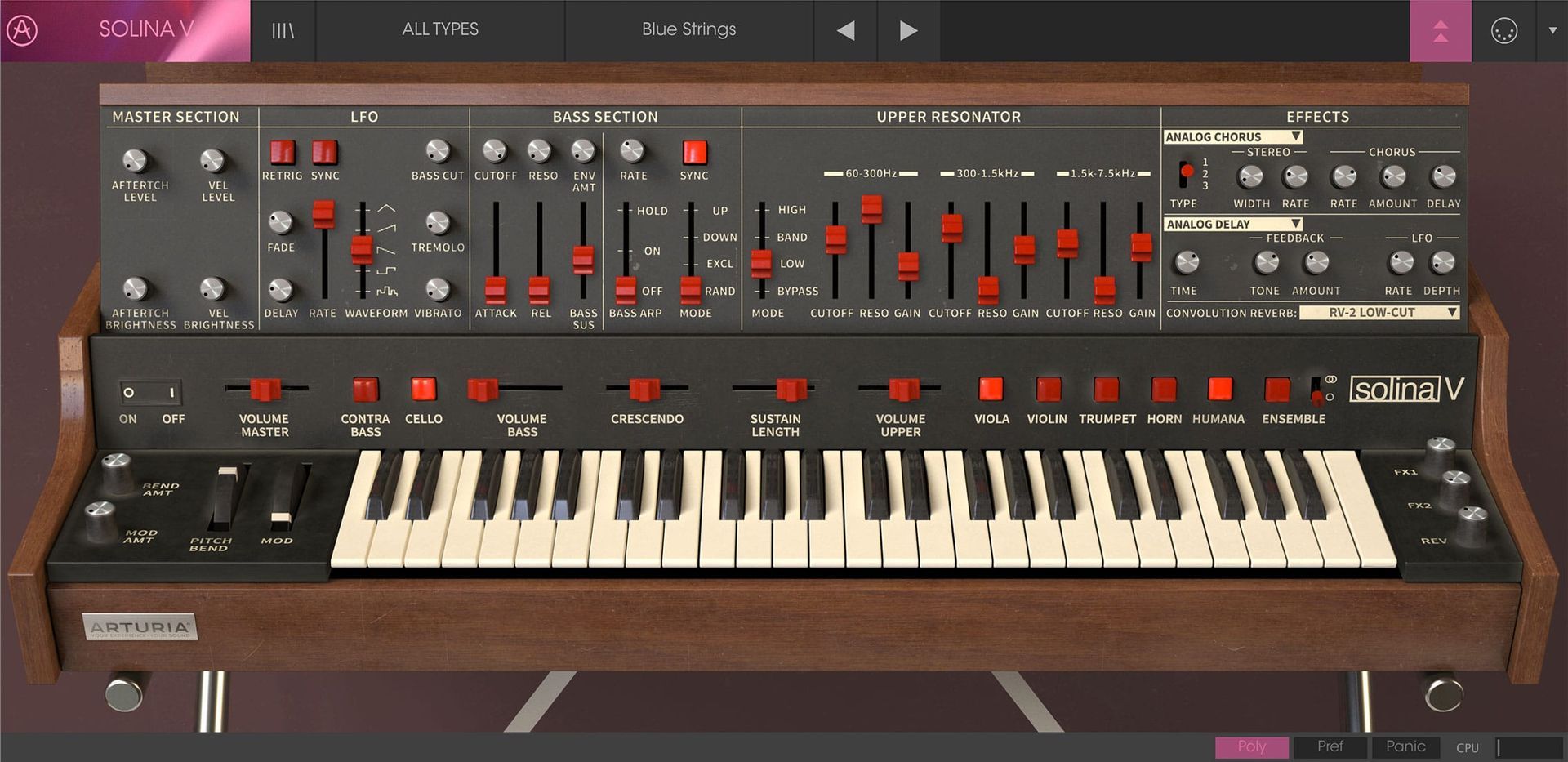
Main Features
All of the original parameters of the ARP/Eminent Solina string ensemble
Vox Humana sound modeled after the original 1978 Bob Moog's Polysynth
Classic Paraphonic operation as well as selectable Polyphonic mode
1978 Bob Moog’s polysynth resonator section on Upper Section
24dB per octave resonant filter on Bass Section
Arpeggiator on Bass Section
LFO for vibrato, tremolo and filter modulation
Aftertouch and velocity level controls
Solina MK1 and MK2 ensemble modes
3-mode stereo chorus
Stereo dual phaser
Analog delay
Digital sync delay
Convolution reverb with 24 modeled reverbs
150 presets
Platform Specifications
Windows
- Win 10+ (64bit)
- 4 GB RAM
- 4 cores CPU, 3.4 GHz (4.0 GHz Turbo-boost)
- 3GB free hard disk space
- OpenGL 2.0 compatible GPU
- ARM processors not supported on Windows
Required configuration
- Works in Standalone, VST, AAX, Audio Unit, NKS (64-bit DAWs only).





Apple
- Mac OS 11+
- 4 GB RAM
- 4 cores CPU, 3.4 GHz (4.0 GHz Turbo-boost) or M1 CPU
- 3GB free hard disk space
- OpenGL 2.0 compatible GPU
Work with ASC
- An elegant and simple solution to help you install, activate, and update your Arturia software instruments.