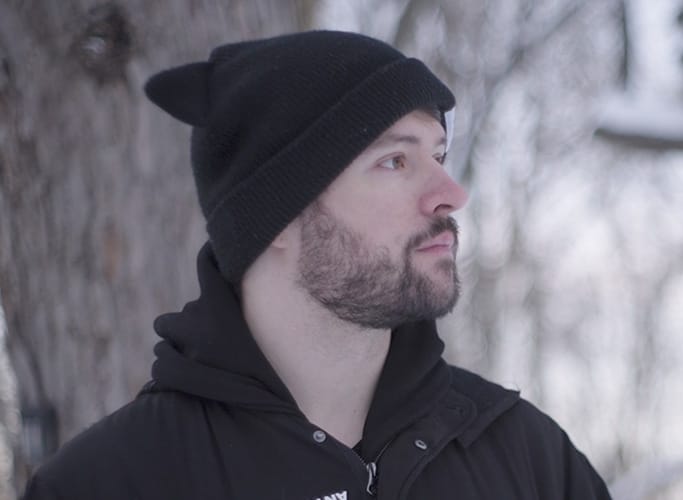
Virtual Riot
in-depth sound design with Pigments 7
Virtual Riot, the alias of German-born producer and DJ Valentin Brunn, has become synonymous with highly imaginative, forward-thinking dubstep and bass production. Known for hyper-detailed drops and razor-edged sound design, he’s built a catalogue that balances playful composition with high-level engineering - with tracks that hit hard and never cease to impress.
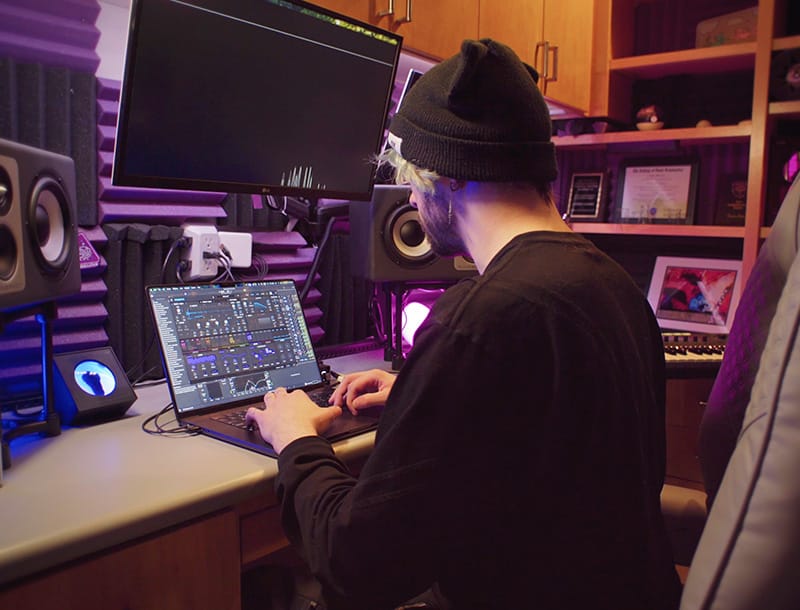
We stepped into the studio to watch that process unfold as it happens, tracing each decision from first sketch to full drop, with Pigments 7 driving each stage of the process.

From piano to bass futurism
Valentin grew up in Germany in a musical household where instruments were a part of daily life. He started piano lessons at six, with influences ranging from progressive rock and metal to heavier guitar music that later opened the door to electronic production. A period playing church organ expanded his sense of space and harmony, but it was the bridge between songwriting and seemingly impossible synth textures that snowballed into what we see today.
After moving to the U.S his profile grew and so did the scope of what he wanted to achieve creatively: design powerful sounds that work both as personal listening and live performance tools, music that holds a crowd through tension, release, and dynamic shifts. You can hear that throughout his discography, from the charting Chemistry EP to full-length statements like Simulation and Stealing Fire. Working with Skrillex also helped sharpen an instinctive, intuition-led approach.
In all these examples we hear a sound defined by contrast: heavy, dissonant sound design set against clean chords, melodies, and hooks. It’s this contrast that creates the energy and flow of his production, gnarly textures that hit harder because they’re framed by a musical core.
“It’s like a mix of this very classical approach to songwriting and this super technical engineering approach to the sound design.”
Studio workflow as chain reaction
If there’s a single principle that defines Brunn’s workflow, it’s avoiding friction. He’s meticulous because its important not to lose the thread of an initial idea. In a genre where one bass hit can take hours, it’s easy for the process to stall, and once it does, the momentum can disappear.
What matters the most for me… is not being inhibited by anything.
That’s why he keeps his library organised, builds and saves sounds ahead of time, and commits to audio when things are working well instead of endlessly fiddling. Ideas can start anywhere - piano chords, a drum loop, a pad, even a basic tone to be built upon - with the goal to keep ideas moving while the energy is fresh.
Underlying all of this is a deep sense of play. Brunn traces his approach back to childhood obsessions with dominoes, marble runs, and systems where careful setup matters more than constant intervention. In the studio, he treats a DAW the same way: designing patches, modulation paths, and signal flows that interact and evolve on their own. Hitting play becomes the moment everything is set in motion - a controlled reaction that can be triggered, reset, and refined.
“For me, at least in my brain, making music in a DAW is the same thing where you set up all the pieces and it’s like a chain reaction that’s going to happen. And when you hit the space bar and it plays, you’re like setting it off — but you get to do it over and over.”
Building the track inside Pigments
In this session, the foundations are deliberately simple: a plucky supersaw lead establishes the motif, while a granular pad provides a slow, rising harmonic mist built from bell samples. The pad isn’t static, random modulation introduces controlled uncertainty, occasionally throwing grains up or down octaves, while pitch quantization keeps the result in key.
From there, function generators come into effect. A single downward curve drives multiple destinations at once - wavetable position, filter movement, resonance behaviour, and even LFO speed - transforming the same patch from a bubbly texture into something more tonal as it fades. Instead of leaning on multiple automation lanes, the sound evolves internally, like a system being set in motion.
Transitions are treated with the same economy. For risers, he reaches for Pigments’ harmonic oscillator and its cluster behaviour, turning what begins as a harmonic stack into something more akin to a spaceship engine. A macro becomes one gesture that shapes density, filtering, delay, and reverb growth, plus a final envelope move that pulls the tail to silence without needing automation. The point isn’t complexity for its own sake; it’s designing sounds that evolve and interact fluidly with the rest of the arrangement.
For the drop, Pigments stays at the centre. He builds two aggressive bass voices: a bitey, acid-leaning bass stab pushed through the new Rage filter modes, then reinforced with exaggerated dynamics and controlled width; and a classic dubstep growl, built from a formant-ready wavetable, tight band-pass filtering, stacked multiband dynamics, and a subtle but impactful addition of the Corroder FX.
To finish, he adds a melodic layer that nods back to the intro’s chip-tuned character, using quantization and a one-shot function generator to create a descending “dial tone” motion above the heavier bassline. This completes the loop as a complete statement and exemplifies Pigments’ prowess for fast-paced and in-depth sound design across every stage and sound-type.
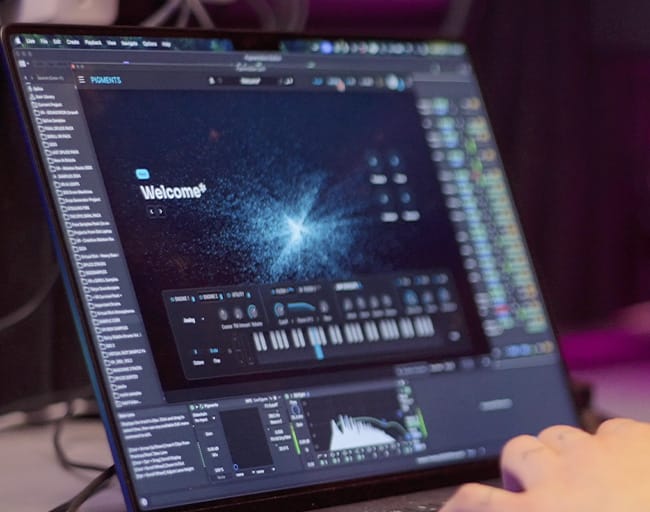
Play view: performance-first
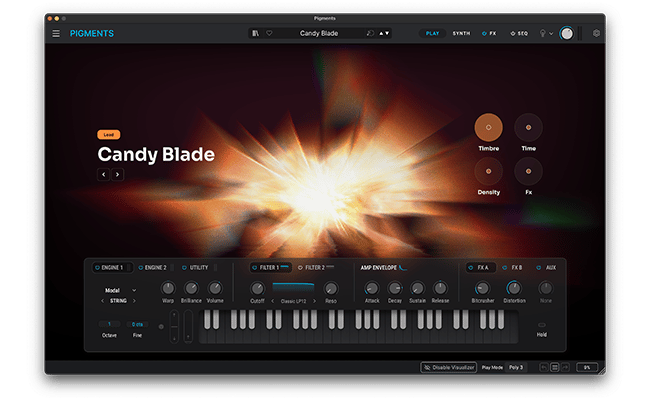
Pigments 7’s Play View fits neatly into a fast-paced approach: inspiration, clarity, and performance-ready controls. It brings the most relevant parameters for each patch to the surface - engine controls, filter shaping, and key effect macros - so you can get creative with a patch, see it respond in real-time and shape the sound without breaking focus.
A personal connection
Virtual Riot’s sound lives in a middle-ground between sonic play and craft. His tracks often start from simple ideas before opening out into dense bass design and highly worked sonic detail. Clean harmonic sections counterpose rougher, more dissonant material, with movement and tension coming from the interaction of elements rather than constant escalation.
Pigments fits perfectly into his boundary-pushing style and way of working, as a place where deep sound design and experimentation can coexist. Whether building aggressive bass sounds, shaping transitional effects, or adding texture and detail, the focus stays practical: remove anything that slows the process, commit ideas while they still have energy, and let the track find its own direction.
“Ultimately i’ve had this idea in my head of what the sound world is that I want to go for and every new song is just an attempt at getting that right from a different angle.”